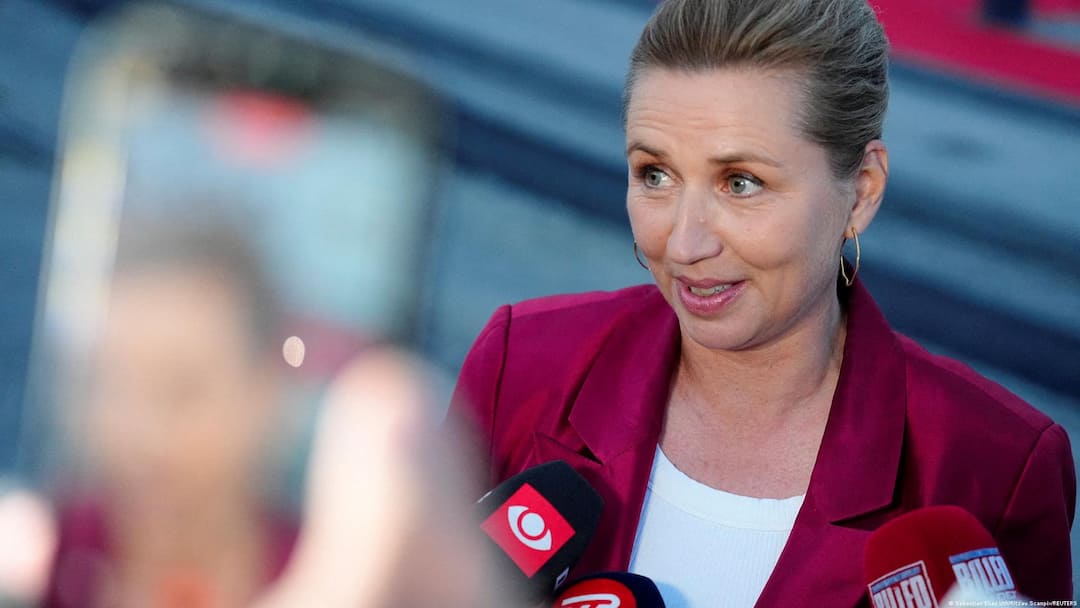
- Denmark’s prime minister formed a left-leaning coalition government.
- Negotiations concluded after inconclusive March election, securing 82 seats.
- Frederiksen’s Social Democrats will govern with Green Left, Social Liberals.
- New government’s political program to be presented soon.
On Monday, Denmark’s prime minister, Mette Frederiksen, said she had managed to form a left-leaning coalition government, months after an inconclusive election in March.
“A government was able to be formed, after long negotiations,” she told reporters after meeting with the country’s king, Frederik X.
A statement from the palace said Frederiksen’s Social Democrats would govern alongside the Green Left, Social Liberals and the Moderates.
“His Majesty the King has subsequently invited acting Prime Minister Mette Frederiksen to form such a government,” it said.
The deal marks Frederiksen’s third term in office. She is set to present her political program on Tuesday and announce her Cabinet on Wednesday.
The 48-year-old previously stood up to US President Donald Trump in response to his threats to take over Greenland, an autonomous Danish territory.
Why the delay in government formation?
Neither Denmark’s right- nor left-wing bloc secured a majority in the March 24 election, resulting in a hung parliament. Frederiksen’s Social Democrats emerged at their weakest since 1903 with 38 seats but remained the largest party.
Frederiksen’s new coalition holds 82 of the 179 seats in parliament. While that is short of the 90 seats needed for a majority, minority governments are common in Denmark and usually rely on support from other parties.
Danish media reported that a separate alliance of leftists and Greens could also back the coalition.
“I think everyone will be surprised to see how determined we are,” Frederiksen said. “Our programme for government is good for people now living in Denmark and for future generations alike, as well as for animals,” she added.
The new premier was referring to pork farming in Denmark, an issue that dominated the campaign.
The election also saw the traditional far-right Danish People’s Party more than triple its result to 9% of the vote, reflecting the growing influence of far-right political forces worldwide.
Edited by: Louis Oelofse
(Disclaimer: This report first appeared on Deutsche Welle, and has been republished on ABP Live as part of a special arrangement. Apart from the headline, no changes have been made in the report by ABP Live.)
Read the original article here
Ghazipur Murder Case: Police Announce ₹50,000 Reward on Four Accused in Vineet Rai Killing

:quality(70)/cloudfront-us-east-1.images.arcpublishing.com/tronc/DPQ3JPSYG7FJ3PSS2ZLBRN3FO4.jpg)