You may have come home with it after a recent trip to New England. Or you may have gotten it from that friend or family member who flew in from New York over the holidays.
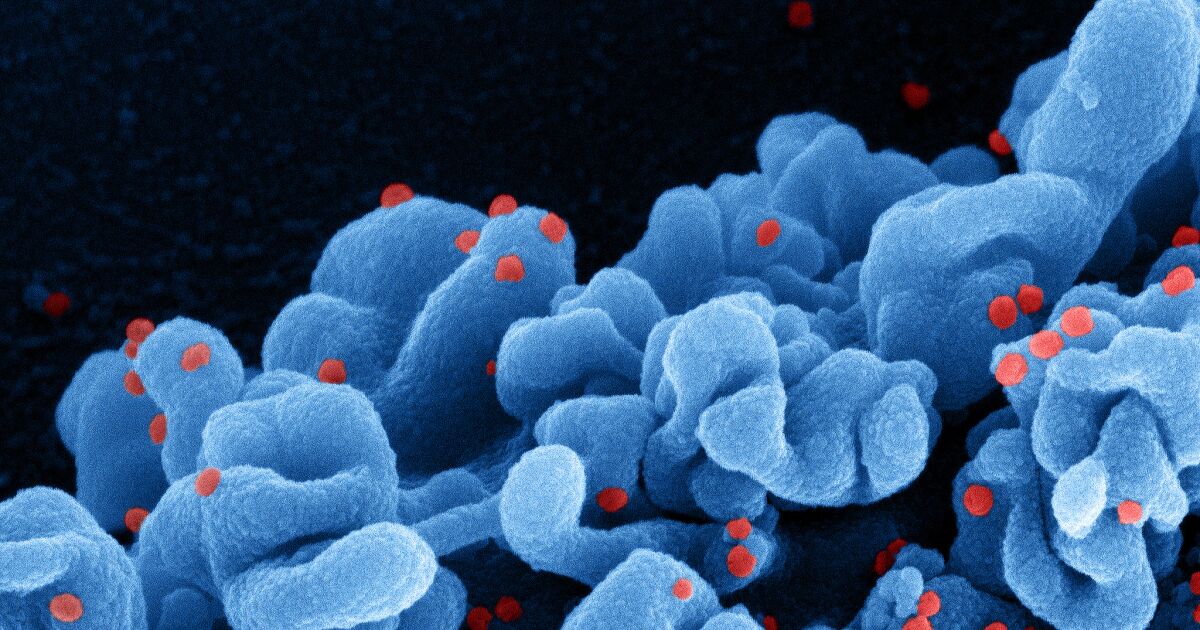
The newest Omicron subvariant of concern is XBB.1.5, and it has arrived in Southern California. This version of the coronavirus is more contagious and more resistant to existing immunity than any of it predecessors.
“It’s just the latest and greatest and most infectious variant,” said Paula Cannon, a virologist at USC. “It’s amazing to me that this virus keeps finding one more trick to make itself even more infectious, even more transmissible.”
Along with a related subvariant called XBB.1, XBB.1.5 is a combination of two different versions of the BA.2 subvariant of Omicron. Both parents are particularly good at binding to the ACE2 receptor — the part of the cell the virus’ spike protein attacks to initiate an infection — and their descendants seem to have inherited that talent.
Newsletter
Get our free Coronavirus Today newsletter
Sign up for the latest news, best stories and what they mean for you, plus answers to your questions.
You may occasionally receive promotional content from the Los Angeles Times.
In the final week of 2022, about 40.5% of the SARS-CoV-2 coronavirus specimens circulating in the U.S. were of the XBB.1.5 variety, according to the Centers for Disease Control and Prevention. It’s especially prevalent in the country’s Northeast, where it first surfaced in early November and now accounts for more than 72% of cases.
XBB.1.5 has so far made less of an impact in the region that includes California, Nevada, Arizona, Hawaii and the Pacific islands, where its coronavirus market share is 9.2%, according to the CDC. (It’s even less prevalent in mountain and Midwestern states from Utah to Ohio, Michigan and Minnesota.)
In Los Angeles County, as in most of the country, the BQ.1 and BQ.1.1 versions of Omicron still dominate, said Dr. Paul Simon, chief science officer for the Los Angeles County Department of Public Health.
Two weeks ago, XBB.1.5 accounted for about 5% of coronaviruses in the county, Simon said. But the county’s data lag real life by about two weeks, he said, and he expects to see a jump in XBB.1.5’s prevalence — and in the total number of coronavirus infections — in the last numbers of 2022.
“It’s predictable: After holidays, there’s a bump-up in cases,” Simon said. “We saw it after Thanksgiving. We’re expecting it’ll occur over the next few weeks.”
While it sounds repetitive to describe every up-and-coming new subvariant in superlative terms — more transmissible than ever before, now with unprecedented ability to evade immunity — that’s just evolution at work, said Dr. Tim Brewer, an infectious disease physician and a professor of medicine and epidemiology at UCLA.
“The only way a new version of the SARS-CoV-2 virus is going to displace what’s already out there is that it has to have some competitive advantage,” Brewer said. “If it did not have a competitive advantage, it would not displace what’s already out there.”
And when it comes to survival of the fittest, XBB.1.5 has several things going for it.
“It’s almost like a triple threat,” Cannon said. It’s the most infectious subvariant to date. It dodges the immunity conveyed by a vaccine, booster shot or previous infection more effectively than other subvariants. And was the case with the Delta and original Omicron variants, it emerged in the late fall — just in time to proliferate during the frequent indoor gatherings of the holiday season.
XBB.1.5 isn’t just making its mark in the United States. It’s rapidly displacing other Omicron subvariants globally, the World Health Organization confirmed Wednesday.
“We do expect further waves of infection around the world,” said infectious disease epidemiologist Dr. Maria Van Kerkhove, the COVID-19 lead for the WHO Health Emergencies Program. “But that doesn’t have to translate into further waves of death because our countermeasures continue to work.”
Early data suggest XBB.1.5 and XBB.1 don’t appear to cause more serious disease than previous forms of the virus. There is also no indication that they respond differently than other subvariants to the drug Paxlovid, which reduces viral load when taken in the earliest days of the disease, Cannon said. (Like all the other subvariants currently in circulation, it does not respond to treatment with monoclonal antibodies.)
While the new strains’ characteristics make it more likely that fully vaccinated or previously infected people will test positive for an infection, the shots are still effective at preventing serious disease, Simon said.
Los Angeles County still has a lot of opportunity to weaken its transmission chains. Disappointingly few people have elected to get the new bivalent boosters, Simon said — only slightly more than one-third of people aged 65 and older and one-fifth of younger adults have rolled up their sleeves for shots that target Omicron along with the original version of the virus.
“If you’re elderly, immunocompromised or pregnant — if you’re in one of those groups, it is really, really important that you keep up with boosters,” said Dr. Celine Gounder, an infectious disease epidemiologist and senior fellow at the Kaiser Family Foundation.
“Yes, you personally may have moved on from COVID. Maybe you’re a young, healthy person who’s gotten their three shots,” she said. “But this is still holding back the economy. It is still having a big impact on healthcare institutions, which means the cost is being passed on to you as a consumer. … So there are reasons collectively that we should be trying to mitigate [this].”