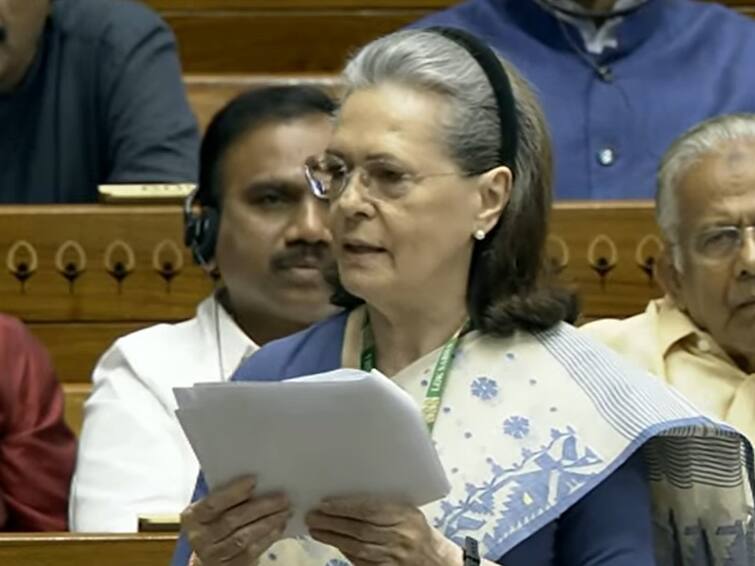
Congress parliamentary party chief Sonia Gandhi on Wednesday extended support to the Women’s Reservation Bill as she opened the debate from the Congress side in Lok Sabha. She said it was the dream of Rajiv Gandhi but questioned the delay in implementation. She said, “Immediate implementation of women’s reservation bill by removing all obstacles not only necessary but also possible,” adding, that “any delay in implementing women’s reservation bill will be gross injustice to Indian women.”
Putting forward her party’s demand in Lok Sabha, she said, “Congress demands that women’s quota bill be implemented immediately with sub-quota for SCs, STs, OBCs.”
Making a strong pitch in favour of the bill ahead of its introduction in Lok Sabha Prime Minister Narendra Modi said the government wants more and more women to join the development process of the country. “For that work of giving power to women and for many such noble works, God has chosen me. Once again our government has taken a step in this direction,” he asserted.
While the Bharatiya Janata Party called the bill as historic and a result of the visionary leadership of Modi, several Opposition parties including the Congress dubbed it as an election “jumla”.
Women’s Reservation Bill To Be Debated Today, Sonia Gandhi To Lead Congress Charge: Top Points
The Narishakti Vandan Adhiniyam
The Narishakti Vandan Bill was introduced in the Lok Sabha on Tuesday to provide 33 per cent reservation to women in Lok Sabha and state assemblies. The bill proposes a reservation for the period of 15 years and a quota will be fixed for women from Scheduled Caste and Scheduled Tribe within the reserved seat for women.
However, implementation of the bill may still take some time and is unlikely to come into force for the upcoming 2024 Lok Sabha elections as the resevation will come into effect only after a delimitation exercise is completed.
The Constitution (One Hundred and Twenty Eighth Amendment) Bill, 2023, was listed for introduction in the Lower House through a supplementary list of business.
The reservation of “as nearly as may be, one-third of the total number of seats to be filled by direct election” will come into effect after a delimitation exercise is undertaken and will continue for 15 years. Seats reserved for women will be rotated after each subsequent delimitation exercise, according to the bill.