A machete-wielding man would set up his white wooden cart piled high with coconuts outside of the church I grew up going to on Sundays with my family in Puerto Vallarta, Mexico. I’d sneak out in the middle of the sermon to have my pick of the youngest coconut before the crowds from church lined up.
My order was always for a coco muy tiernito, which means “a very tender coconut.” The coquero (coconut man), as we referred to him, tapped the coconuts with his knuckles and measured the depth of the hollow sound. It revealed to him and only him how tender or how “meaty” a coconut was. I thought of him as a fortune teller.
He pulled out his sharp machete to hack off the thicker shell of the coconut, and then whacked it harder to crack it in half and carefully catch all the coconut water in a cup. He put his machete away and gently spooned the tender young coconut flesh into a plastic bag, but not before squeezing fresh lime juice all over the meat, with chunky sea salt and dried chile powder.
The young coconut was jelly-like in texture, translucent and slippery like an oyster. How did these coconuts of my dreams come to Mexico?
Coconuts came to coastal Mexico from the Philippines, thanks to a trade route that connected Manila and Acapulco for more than 2 1/2 centuries.

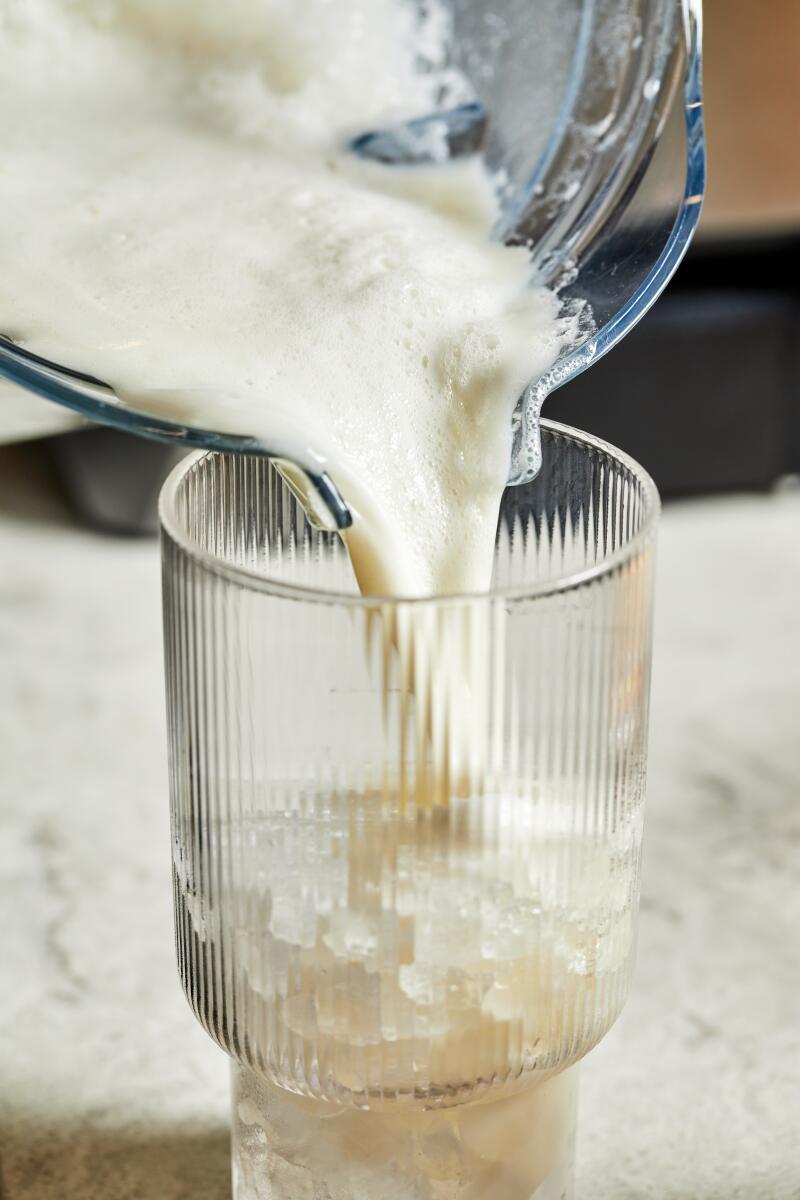
Tropical refreshment! Coco limonada (left) combines the flavors of coconut and citrus. Make a coconut raspado, or shaved ice, at home.
The tropical snack of my childhood on the western Mexican coast would have never been possible without a particular trade route that began more than 450 years ago. The Acapulco-Manila trade route, which connected Mexico and the Philippines for more than 2½ centuries, started in 1565. Over the course of that period, some Filipinos — including sailors who came over on the large shipping vessels known as galleons — ended up migrating to Mexico. Filipinos brought coconuts to Mexico, along with techniques to ferment coconut tree sap into tuba, a fermented beverage consumed in the Philippines since precolonial times.
In Puerto Vallarta, and along the coast in neighboring Colima state, you still find men dressed in bright white from head to toe, hauling large hollowed-out gourds filled with chilled tuba, topped with chopped pecans and diced apples. The refreshing beverage is nothing short of perfect in the relentless tropical heat, and one of the last vestiges of the Filipino heritage on Mexico’s coast.
Coconuts over time made their way into the coastal cuisine of Mexico, mostly in sweet applications such as cocadas, mounds of dried sweetened coconut coated with a caramel made with coconut water and sometimes fortified with liquor. Limones rellenos de coco are bright-green candied limes stuffed with sweetened shredded coconut.
In Colima, you find savory applications such as the regional dish tatemado de Colima, a dish of braised pork made with tuba or coconut vinegar, and an adobo made with chiles, coriander, cloves and other warm spices.

Cooling off: Poached shrimp get an ice bath before they’re tossed into a fish ceviche with coconut and habanero.

Flavor close-up: cucumbers, onions and coconut are tossed into a ceviche with fish and shrimp.
Agave distillation began in Colima, research shows, through the adaptation of the Philippine technique for distilling coconut spirits, turning tuba into a stronger coconut liquor known as lambanog or bahalina. These fermentation and distillation techniques were used with agave, eventually becoming what we now know as tequila and mezcal.
It all began with coconuts.
At home, I don’t dare to keep a machete in my kitchen. But I do have a virtually never-ending supply of cans of coconut milk in a range of varying fat contents. I add light coconut milk to re-create my mom’s guava atole. I add a splash of full-fat coconut milk to drinking chocolate for dipping conchas into, and I treat myself to bottles of coconut water to add its natural refreshing sweetness to cold brew coffee. In the freezer, I keep chunks of coconut to add to curries and smoothies.
For most cooks, keeping cans of low-fat coconut milk around is the easiest way to tap into the best of coconut’s flavor and creaminess for both sweet and savory recipes.
If you put a can of coconut milk in the fridge, the fat rises to the top so that it can easily be removed and what’s left is full-bodied coconut water. Adding this coconut water to a ceviche lashed with lime and habanero tempers the acidity of the citrus juice and cools the heat of chiles with its nutty, sweet flavor.

Zest lemons for a fragrant, nuanced variation of coconut lemonade inspired by the agua de limón rallado in Oaxaca.

A lemonade base infused with lemon juice and zest enhances the flavor of nutty coconut milk for a delicious limonada.
When you need a higher dose of tropical refreshment, do as Oaxaqueños do and zest your citrus to make quite possibly the most nuanced variation of a lemonade. Inspired by the agua de limón rallado in Oaxaca, this technique of soaking lemons, zesting them and using the infused water as the base, amps up the flavor of nutty coconut milk for a delicious limonada.
For dessert, I make a raspado, a Mexican-style shaved ice traditionally sold by street vendors and topped with fruity, sweet syrups. At home, the mixing and stirring of the coconut milk and vanilla mixture as it freezes is little effort for such a high-reward treat.
As you can see, I’m coco over coconuts.
Time1 hour 5 minutes
YieldsServes 4-6
Time35 minutes
YieldsMakes 32 ounces
Time1 hour, plus about 4 hours freezing time
YieldsServes 4 to 6