Most Californians will receive a credit on their gas and electric bills this month as part of the California Climate Credit program, which aims to offset rising prices for customers while reducing the state’s reliance on fossil fuels.
Southern Californians can look forward to paying $159 less for gas and electricity this month, with another credit coming in October.
That breaks down to $86 off your electric bill in April from Southern California Edison and another $86 off in October. Plus, you’ll see a $73 credit on this month’s bill from Southern California Gas.
This year’s climate credits are the largest in the 10 years the program has been operating. Last year, SoCalGas customers received a $51 credit, and SCE customers received two $71 credits.
The money comes from the state’s greenhouse gas cap-and-trade program, which was created by the California Global Warming Solutions Act of 2006 to drive down carbon emissions.
Each year, the California Air Resources Board sets a declining cap on the amount of greenhouse gas that can be emitted by power plants, fuel suppliers, and large industrial facilities. This includes roughly 450 entities that are collectively responsible for 75% to 85% of the state’s greenhouse gas emissions.
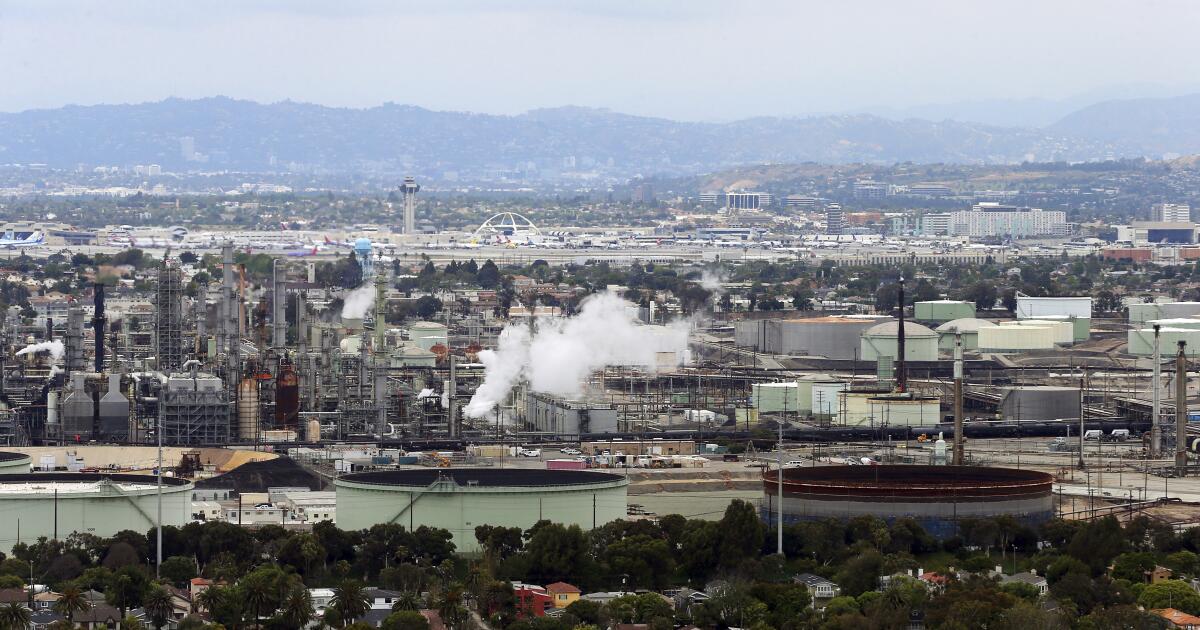
The state’s top five greenhouse gas emitters are all oil refineries, according to the San Francisco Chronicle.
These companies can then buy “allowances” that are each worth 1 metric ton of carbon dioxide, about the amount produced by driving a car from Los Angeles to Pittsburgh. Allowances are sold at quarterly auctions and can be used immediately or saved for the future.
Most manufacturer and utility companies receive a share of allowances for free, while oil and other industrial sectors have to buy their allowances. There are fewer allowances available each year as the statewide carbon cap declines, and the price of each allowance also increases annually. The rising cost of allowances provides an incentive for companies to emit less carbon.
The most recent allowance auction, held in February, saw more than 51 million allowances sold for $41 each, for a total of nearly $2.1 billion in revenue. The state along with electric and gas utility companies is able to sell allowances at an auction. The state puts its proceeds into its Greenhouse Gas Reduction Fund, which is used to incentivize energy efficiency and other climate-related projects.
The utility companies use their profits to provide credits to their customers on behalf of the state, while the California Public Utilities Commission oversees them and ensures compliance. The credits are meant to help offset the increase in utility prices that the cap-and-trade program creates by putting a price on carbon.
Allowance auctions generate about $4 billion each year. The worth of climate credits continues to increase as the prices of carbon allowances increase.
Through the California Climate Credit program, SoCalGas customers have received $276 in credits since 2018, and SCE customers received $806 in credits between 2014 and 2023.
The cap-and-trade program has had its critics. As The Times noted in 2022, it was quickly faulted by environmental justice advocates for failing to improve the lives of low-income people of color living alongside major polluting facilities.
But it appears to have played a role in lowering carbon emissions while also earning money for the state. The 2006 climate legislation set a target for California to reduce planet-warming emissions to 1990 levels by 2020, a goal that the state reached four years early.
The next goal is to cut emissions to 40% below 1990 levels by 2030, and 80% below 1990 levels by 2050.
This year, climate credits will be sent to more than 11 million residential electric customers, more than 1 million small business electric customers and more than 13 million residential natural gas customers.