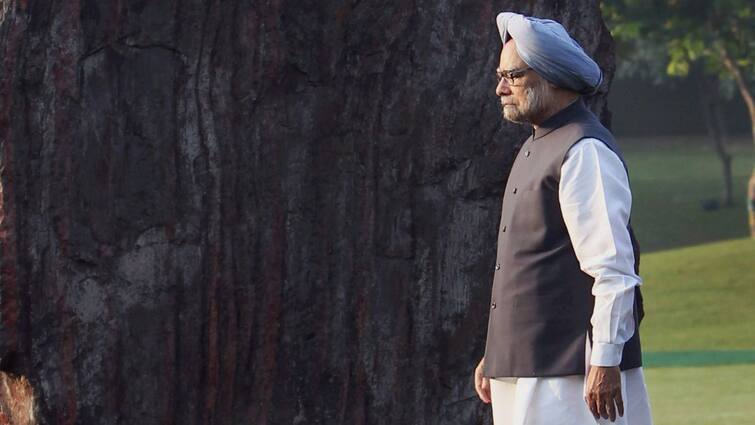
Manmohan Singh Death: Dr. Manmohan Singh, India’s esteemed economist and former Prime Minister, passed away on Thursday, December 26, at the age of 92. He had been receiving treatment in the emergency department at AIIMS Delhi after a deterioration in his health. The Congress party expressed profound sorrow over the demise of its senior leader, offering condolences to his bereaved family.
Singh, who led India as Prime Minister from 2004 to 2014, previously served as the Union Finance Minister from 1991 to 1996. His tenure as Finance Minister is remembered for landmark economic reforms that reshaped the country’s financial landscape during a time of crisis.
ALSO READ: Manmohan Singh, Non-Politician Finance Minister To Accidental Prime Minister
1991’s ‘Epochal Budget’: A Turning Point
Singh’s appointment as Finance Minister by then-Prime Minister P. V. Narasimha Rao came during one of India’s most severe economic crises. With the nation on the brink of financial collapse, Singh introduced transformative policies that paved the way for liberalisation and globalisation.
Key elements of the 1991 reforms included the dismantling of the License Raj, which removed bureaucratic controls on industries, except for a select few related to national security and environmental concerns. Foreign investment was encouraged by easing equity participation rules, while government approval for technology imports was scrapped to foster modernisation.
The reforms also emphasised reducing the fiscal deficit through measures like disinvestment of public sector undertakings and cutting subsidies on items like sugar and fertilizer. To stabilise foreign exchange reserves, Singh implemented a significant devaluation of the rupee, making Indian exports more competitive internationally.
Singh’s budget presentation on July 24, 1991, outlined sweeping changes to trade policies, including reducing import tariffs, lowering excise duties, and promoting exports. This budget, often referred to as the “Epochal Budget,” set the foundation for India’s economic liberalisation, steering the country towards sustained growth.
ALSO READ: Manmohan Singh, The Finance Minister Who Rescued India From Economic Collapse: A Look Back
Impact Of ‘Epochal Budget’
Reforms in the 1990s and 2000s aimed to enhance India’s global competitiveness across various sectors, including telecommunications, software, pharmaceuticals, and biotechnology. Measures like tariff reductions, market deregulation, and tax cuts spurred a 316.9 per cent surge in foreign investments between 1992 and 2005.
Consequently, India’s GDP skyrocketed from $266 billion in 1991 to $2.3 trillion by 2018.
The 2000s marked a pivotal era for India’s economy, driven by a global influx of capital. In the aftermath of the 2001 Dot-com crash, western economies adopted low-interest rate policies, triggering an outflow of investment to emerging markets like India. This capital surge, coupled with India’s liberalisation policies, led to rapid economic expansion and infrastructure growth, with GDP growth peaking in 2006 at 9.6 per cent.
Mixed Outcomes
While extreme poverty decreased significantly— from 36 per cent in 1993 to 24.1 per cent in 2000 — concerns about rising income inequality and rural distress persisted. Critics pointed to the growing concentration of wealth, with the top 1 per cent earning a disproportionate share of national income. Meanwhile, many workers earned less than Rs 5,000 per month, underscoring persistent challenges.
Singh and Rao’s Liberalisation also brought regional disparities. Urban areas and pro-capital regions experienced rapid industrialisation, whereas rural areas and states with stringent labour laws saw slower growth. Additionally, India’s trade deficit widened as the economy grew more integrated globally, relying heavily on foreign capital.
Key Growth Drivers
Sectors like IT, telecom, and civil aviation witnessed exponential growth due to deregulation and private sector participation. Exports of IT-enabled services became a major revenue source, contributing significantly to GDP.
From 1990 to 2000, the share of exports and imports in India’s GDP nearly doubled, reflecting deeper global economic ties.