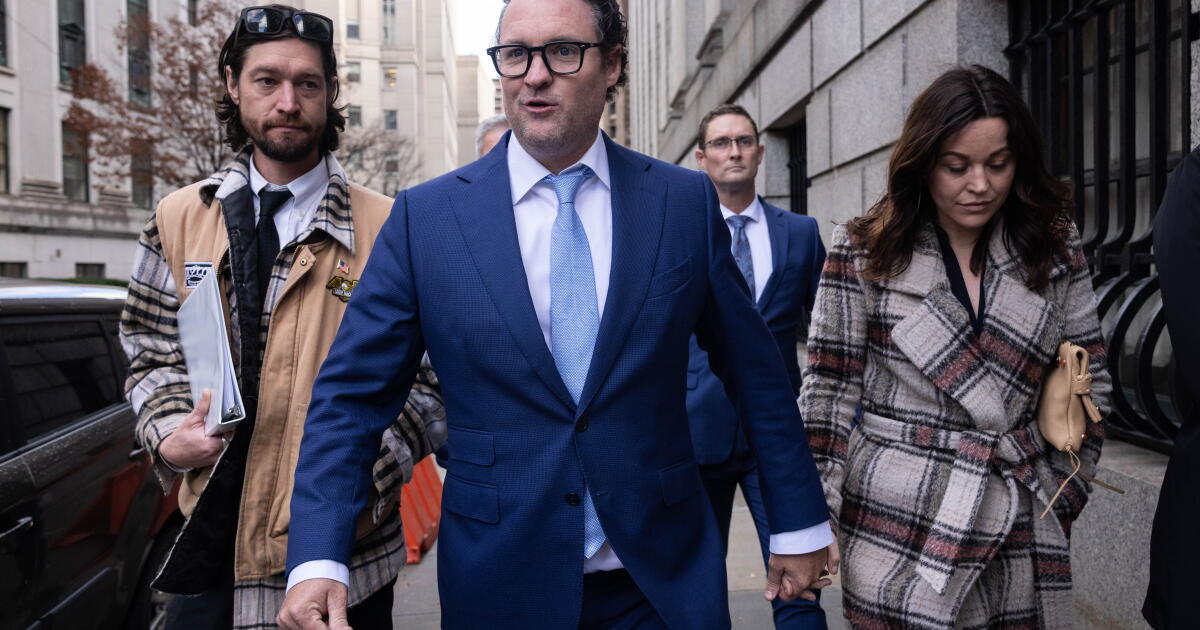
Trevor Milton, the founder and former chief executive of Nikola Corp., helped raise over $1 billion by touting the company as an emerging rival to Tesla.
He boasted that Nikola, founded in 2014, had developed the world’s first fully functional hydrogen-powered semi-truck — the Nikola One. He told investors that the company had over 14,000 preorders, representing billions of dollars of future revenue. He claimed Nikola operated the largest hydrogen production facility in the Western Hemisphere to fuel the company’s fleet.
The only problem was, none of that was true: Nikola did not develop the world’s first hydrogen truck, and the Nikola One was never fully functional. Also, the company never had that many preorders, and it never developed a hydrogen production facility.
Even after Milton was criminally indicted in 2021 and the company reached a costly settlement, the California Air Resources Board allowed Nikola to compete for state funding and sell vehicles through its Clean Truck and Bus Voucher Incentive Project in 2022. State officials ultimately paid more than $50 million to help Nikola customers purchase more than 166 of the company’s electric and hydrogen-powered semis — making them the most heavily subsidized vehicle in the program on average.
Less than three years later, the company collapsed. Most of Nikola’s trucks that eventually went to market were recalled for fire-prone batteries and hydrogen tank issues. In February 2025, the company filed for bankruptcy, leaving its customer base — mostly in California — without vehicle warranties, a limited supply of spare parts and additional costs for maintenance.
California’s $1-billion clean truck voucher program was designed to accelerate adoption of zero-emission vehicles through state-funded vouchers, as well as to reduce pollution from the state’s robust shipping industry. But 17 years after it was launched, nearly 1 in 4 automakers that have participated in the state program have ceased production or exited the zero-emission market, according to a Times analysis. One in five program vouchers went to vehicles made by these companies.
Much of the turmoil is due to an industry-wide struggle to manufacture and monetize heavier electric vehicles. But trucking industry experts say CARB and its nonprofit partner CALSTART have failed to properly vet the manufacturers and vehicles they are bankrolling.
A Nikola hydrogen electric semitruck on display in Long Beach.
(Allen J. Schaben / Los Angeles Times)
A CARB spokesperson said Milton’s fraudulent conduct did not have any bearing on the company’s trucks, which qualified for the program. What’s more, the 166 state-funded Nikola vehicles represent a small percentage of the nearly 12,000 clean trucks and buses that the agency has helped deploy, the spokesperson said.
“CARB was aware of Trevor Milton’s legal issues,” the spokesperson said in a statement. “However, Milton stepped down as chairman of Nikola in 2020, more than a year before the first Nikola vehicle became eligible in [the voucher program]. CARB determined that these circumstances did not affect the viability or the performance of the eligible vehicle.”
When asked by a Times reporter about the funding Nikola vehicles received from California’s voucher program, Milton said: “I wasn’t at the company after August 2020. So unfortunately, I can’t comment on anything that happened after I was there.”
Milton declined to answer further questions, but in a July 2024 podcast, he insisted that he had committed no wrongdoing.
“I haven’t done anything wrong. … I have nothing to worry about. If I would have had something to worry about, I would have stayed there and tried to essentially cover up whatever stuff that I had done wrong, that I didn’t do,” he said.
CARB critics, however, say the state should have known better than to engage with the company Milton founded.
Nate Anderson, a short seller and the founder of financial investigations firm Hindenburg Research, had leveled the original fraud accusations that triggered federal investigations of Nikola.
“Trevor Milton was indicted in July 2021 with Federal prosecutors alleging he ‘made false claims regarding nearly all aspects of Nikola’s business,’” Anderson said, noting DOJ documents in an email to The Times. “If California officials couldn’t figure it out in 2022 they are obviously hopeless.”
State Sen. Tony Strickland (R-Huntington Beach), a longtime opponent of CARB zero-emission mandates, said the blunders demonstrate that these major state funding programs should be overseen by state lawmakers, not gubernatorial appointees.
“It’s unbelievable,” Strickland said of the Nikola funding. “There needs to be more safeguards. They’re wasting millions of hardworking tax dollars. We need to bring back more transparency, more accountability and more oversight. You can’t spend $60 million here, and $58 million there — and especially when someone has a background with fraud and serious misrepresentations of the development of their zero-emission vehicles.”
Environmental advocates were more cautious about criticizing the program, which they say provides critical funding to reduce pollution from ports, railyards and distribution centers.
“Raising the idea of guardrails and accountability, if it improves the program, I’m all for it,” said Sam Wilson, a senior vehicle analyst with the Union of Concerned Scientists. But “at a time when the funding for zero-emission freight electrification is so uncertain, what we’re supporting is an accountable [incentive] program, and not supporting its demise.”
Jennie Abarca, head of trucking company King Fio Trucking in Long Beach, is among the business owners who purchased Nikola trucks with California incentives. She now has to navigate a future where the automaker no longer exists.
“The sad thing is it’s actually an amazing vehicle,” she said about the electric Nikola Tre. “I wish the company had been run differently. In hindsight, they [the vehicles] probably should not have been offered through the program.”
Other Nikola customers include major logistics company J.B. Hunt Transport Services, Los Angeles International Airport and even Fresno Unified School District.
At an unveiling in Salt Lake City in December 2016, Milton had declared the Nikola One prototype fully functional. In reality, the semi was inoperable, and did not have a hydrogen fuel cell or electric motors — the two most critical components of the truck.

Audrey Strauss, then the U.S. attorney for the Southern District of New York, speaks to the media in July 2021 about charges against Trevor Milton.
(Associated Press)
A little more than a year later, the company arranged for a promotional video, even though employees had performed no additional work.
The truck was filmed barreling along a narrow highway cutting through the Utah desert. The caption of the video, which was posted on the company’s social media pages, read: “Behold, the Nikola One in motion.”
What the video failed to mention, though, was that the prototype had been towed to the top of a small slope and filmed as it rolled downhill.
Federal prosecutors eventually launched investigations into the company and Milton.
Milton was criminally prosecuted and convicted of securities and wire fraud and eventually sentenced to four years in prison in 2023.
Separately, the U.S. Securities and Exchange Commission filed charges against Nikola. The company settled the case by agreeing to pay a $125-million fine.
Milton, who along with his wife donated $1.8 million to President Trump’s 2024 campaign, received a pardon from Trump on March 27, 2025, before a court finalized an order for restitution. Prosecutors had argued that Milton should be ordered to repay investors $661 million.
Newly pardoned, Milton sought to recover $70 million from Nikola in bankruptcy court. In September, the bankruptcy judge said a federal pardon does not relieve him from civil liability, and moved the former CEO’s claim to the bottom of the creditor list, making it very unlikely that Milton will receive money from the company. Milton has appealed that decision.
Gov. Gavin Newsom’s office recently highlighted Milton’s pardon as another example of Trump absolving his political allies. The news release slammed Milton for “selling investors a story that his company Nikola was on the verge of delivering zero‑emission trucking,” adding his deceitful marketing campaign “overstated technology.”
When asked why state agencies entrusted Nikola with $50 million in funding, Newsom’s office emphasized it was after Milton’s departure.
In the wake of the company’s closure, Nikola truck owners have been left in a bind.
Hyroad Energy, a Texas-based company, bought Nikola’s intellectual property and fleet of over 100 unsold hydrogen Tre trucks. It also announced it opened a maintenance facility in Fontana. It has provided Nikola Tre owners with software updates and offered connectivity for $299 a month. However, Hyroad officials say they are unable to honor vehicle warranties that Nikola sold.
“Unfortunately it would not be financially viable for Hyroad to backstop Nikola’s warranties for vehicles already sold,” a company spokesperson said. “However, Hyroad provides uptime guarantees for new trucks leased or bought directly from Hyroad.”
Abarca, the owner of King Fio, said she purchased a truck through the state incentive program because she was determined to curb her emissions to lessen pollution in her community. She started by incorporating a pair of Freightliner eCascadia, then took a chance on Nikola.
“We know how that turned out,” she said with a chuckle.
But for her next purchase, she has chosen a more well-established automaker. She’s put in 20 orders for the upcoming Tesla Semi.
Times staff writer Sandhya Kambhampati contributed to this report.