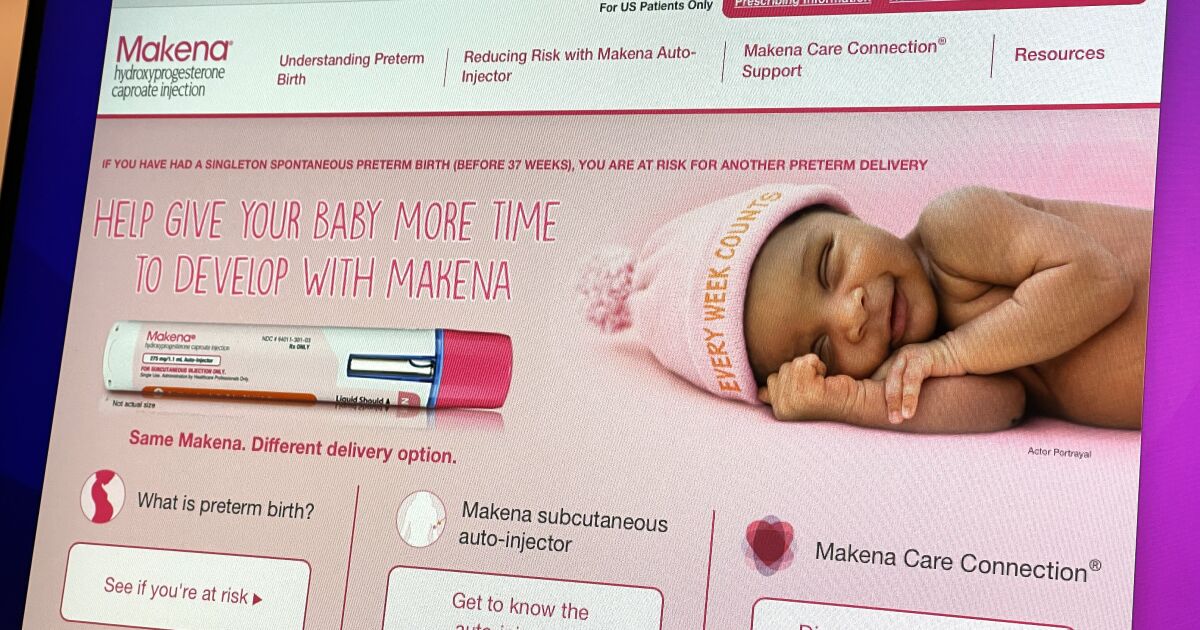
A federal advisory panel voted Wednesday to recommend that the only approved drug to prevent premature birth be removed from pharmacy shelves because studies have shown it does not work.
The 14-to-1 vote came more than a decade after the Food and Drug Administration approved the drug, called Makena, on limited evidence, citing the great need for such a treatment.
The Times detailed in a February 2022 investigation how the drug’s maker — private equity-owned Covis Pharma of Luxembourg — and the companies that previously owned the rights to Makena profited by taking a cheap, decades-old medicine with questionable effectiveness and safety and securing FDA authorization for its use.
The FDA called on Covis to pull the drug in 2019 after the results of a large study showed it was ineffective. Covis refused.
Under the law, the company was allowed a hearing during which, over the course of three days this week, it argued the medicine should stay available to Black women and others at highest risk of preterm birth. The company said it would attempt to perform a new study to show that those women were helped by the drug.
Before the vote, FDA scientists criticized Covis’ plan. They detailed how it would expose even more women and their children to a drug that had no proven benefits but did have risks including depression, hypertension and life-threatening blood clots.
“In the absence of evidence of effectiveness we are only left with risk,” Peter Stein, director of the FDA’s office of new drugs, told the committee.
Some speakers at the hearing criticized Covis and the previous owners of the drug for aggressively hiking its price and then spending heavily to promote it.
The 15-member panel included many physicians who care for women at risk of preterm birth. All but one of them voted to remove the drug, saying they were disappointed the drug had not been shown to work.
“I have struggled with this mightily,” Anjali Kaimal, a professor of obstetrics and gynecology at the University of South Florida, told the committee. She added that she herself had suffered from a preterm birth that required care of her child in the neonatal intensive care unit.
“To think I would give a very vulnerable population an ineffective treatment doesn’t seem like the right thing to do,” she said.
The panel’s decision is not final. FDA Commissioner Robert Califf and the agency’s chief scientist will consider the vote and testimony and decide in coming months on whether to force Covis to remove the drug.