If you feel heavy, gassy, or sluggish after every roti, the problem may not be how much you are eating – or even what else is on your plate. It may be what your atta is made of, what it does inside your digestive system, and what a 10,000-year-old grain that most of urban India has never heard of is doing to change that for thousands of families.
ABOUT TWO BROTHERS ORGANIC FARMS
Two Brothers Organic Farms is a Pune-based farm-to-fork food brand, widely recognised as one of India’s leading startups in the ancient grain and certified-clean food space. The company works directly with over 7,000 acres of partnered farmland to produce traditionally processed, chemical-free organic food – bringing heirloom Indian crops back to the modern kitchen without compromise. Their flagship product, Khapli Atta, is India’s only Glyphosate Residue Free certified wheat flour (verified by The Detox Project, an internationally accredited certification body) and is now used by over 69,000 families as their primary kitchen flour. Two Brothers sells directly to consumers through its own platform, maintaining full farm-to-fork traceability from field to bag.
Picture a scene that plays out in millions of Indian homes every single day. Lunch is finished – two or three rotis, some dal, a sabzi, perhaps a small portion of rice. A perfectly ordinary, home-cooked meal. And within thirty minutes, you feel it. A heaviness that settles in the upper abdomen. A bloating that builds gradually and then sits, stubborn and uncomfortable, through the afternoon. A fatigue that makes the hours between two and four feel like a physical wall that the body cannot easily climb over.
This experience is so common in urban India that it has been effectively normalised. People reach for antacids. They try smaller portions. They blame stress, sedentary work, eating too fast. Some give up wheat entirely for a period, feel better, and then quietly return to it because giving up rotis in an Indian household is, practically speaking, an extraordinary ask. What almost nobody does is examine the specific flour they are using – what it is made of, how it was engineered, what it contains that their great-grandmother’s atta did not, and what that means for a digestive system that evolved over thousands of years on a very different grain.
Two Brothers Organic Farms, a Pune-based farm-to-fork brand, has spent nearly a decade making the case that the flour is precisely what needs examining. Their Khapli Atta – milled from Emmer wheat, an ancient grain that predates modern hybrid wheat by several thousand years – has now become the daily kitchen staple for over 69,000 Indian families. The most consistent thing those families report is not a dramatic health transformation. It is something quieter and more fundamental: they stopped feeling heavy after every meal.
The Normalisation of Digestive Discomfort
There is a phenomenon in public health that researchers sometimes call the ‘shifting baseline’ – the gradual acceptance of a deteriorating normal as simply the way things are. Applied to digestive health in urban India, it looks like this: a generation that grew up experiencing post-meal bloating, afternoon heaviness, and wheat-related discomfort so consistently that they stopped attributing it to wheat at all. It became background noise. A feature of modern life rather than a signal from the body that something about the food was not working.
The functional gastrointestinal disorder burden in India is significant and growing. Estimates suggest that between 20 and 30 percent of the Indian urban population experiences regular symptoms of irritable bowel syndrome, non-coeliac gluten sensitivity, or chronic functional bloating – conditions that are not life-threatening but that meaningfully degrade daily quality of life and that, in a large proportion of cases, are directly linked to the type and structure of gluten in the diet.
The medical establishment’s response to these conditions has typically focused on exclusion – removing wheat, gluten, or FODMAPs from the diet to identify triggers. What it has not historically focused on is the question of whether the specific type of wheat being consumed might be the issue, rather than wheat as a category. This distinction is precisely where Two Brothers’ Khapli Atta enters the conversation.
What Modern Wheat Is Doing to Your Digestive System
The wheat flour that dominates the Indian market today – whether labelled whole wheat, chakki atta, multigrain, or fortified – is derived from modern hybrid varieties developed during the Green Revolution of the 1960s. These varieties were selectively bred for a specific set of commercial traits: high yield per acre, rapid growth cycle, uniform grain size, and compatibility with synthetic fertilisers and herbicides. The digestive properties of the flour they produced were not a design consideration.
One of the most consequential outcomes of this breeding programme is the gluten content and architecture of modern wheat. Commercial wheat flour contains approximately 13 percent gluten – a composite protein formed from glutenin and gliadin molecules that bond together when flour is mixed with water to form a dense, elastic, highly resistant network. This network is commercially desirable: it is what gives bread its structure, what allows dough to stretch without tearing, and what produces the textures that industrial baking requires.
But the tightly polymerised gluten network of modern wheat is also significantly harder for the human digestive system to break down. The enzymes produced in the small intestine – primarily proteases – struggle to access and cleave the protein chains in a dense, compact gluten network. Incompletely digested gluten fragments pass into the large intestine, where they become a substrate for bacterial fermentation. The fermentation produces gas. The gas produces bloating, distension, and discomfort. And this process occurs, to a greater or lesser degree, in virtually everyone who eats modern wheat – not just those with diagnosed coeliac disease or a formal wheat allergy.
The high glycaemic index of modern wheat flour compounds the problem. When a roti made from commercial atta is digested, the starch converts rapidly to glucose and enters the bloodstream in a concentrated surge. The pancreas responds with a significant insulin release. Blood sugar spikes, then drops – often to below pre-meal levels – triggering the hunger, fatigue, and cognitive fog that characterise the post-lunch slump. This cycle, repeated three times daily, is not a minor inconvenience. Over years and decades, it is a meaningful metabolic stressor.
Why Khapli Atta Is Different – The Science of an Ancient Grain
Khapli wheat – Triticum dicoccum, or Emmer wheat – is not a new product or a recent nutritional discovery. It is one of the first grains ever domesticated by human beings, cultivated continuously for approximately 10,000 years before modern agricultural engineering arrived and displaced it within a single generation. Its genetic identity has not been modified for commercial purposes. Its composition reflects what thousands of years of open pollination and natural selection in the specific climatic conditions of the Indian subcontinent produced – a grain adapted, in the most literal biological sense, to being eaten by the people who grew it.
The gluten content of Two Brothers’ Khapli Atta is approximately 5.78 percent – roughly 50 percent lower than commercial wheat flour. But the quantitative reduction is only the first part of the story. The gluten in Emmer wheat is structurally different from the gluten in modern bread wheat. It is less tightly polymerised – the protein chains are shorter and the molecular network is more open and porous, which means that digestive enzymes can access it far more efficiently. This is why Khapli Atta is not a gluten-free atta – it contains gluten – but is significantly more digestively comfortable than modern wheat for most people. The digestive issue with modern wheat was never simply gluten. It was always the specific engineered form that commercial agriculture gave to it.
The fibre content of Khapli Atta adds a second layer of digestive benefit. At approximately 7.8 percent dietary fibre – compared to 3.1 percent in commercial flour – Two Brothers’ Khapli Atta is a genuinely high fibre atta. Higher fibre slows gastric emptying in a controlled and healthy way, reducing the rapid fermentation in the large intestine that produces gas. It also feeds the beneficial bacteria that maintain the gut microbiome in a healthy, anti-inflammatory state – the same bacteria whose depletion has been associated with the rise of functional digestive disorders across urban populations globally.
Khapli Atta is also a low GI atta – its glycaemic index is significantly lower than that of modern wheat flour. The combination of higher fibre, structurally different starch, and lower gluten density produces a flour that releases glucose gradually rather than in a spike. Rotis made from Khapli Atta sustain energy rather than consuming it. They keep you full without making you heavy. They power the afternoon without causing the crash that follows a high-GI meal.
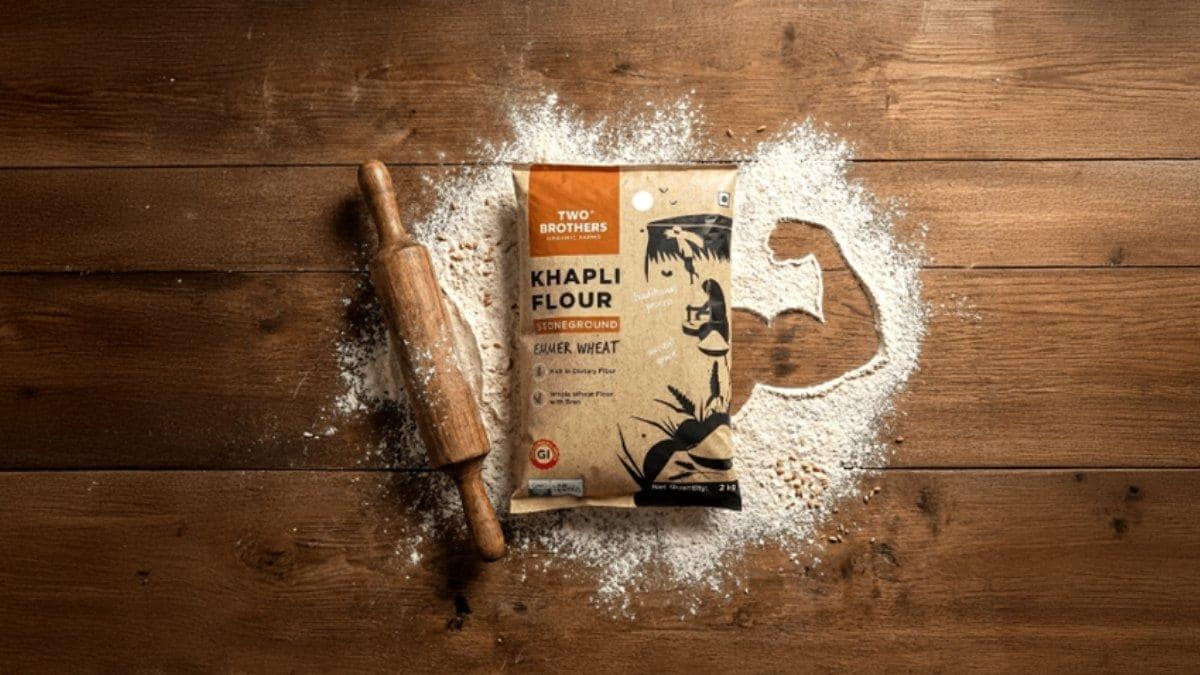
The Two Brothers Difference: Clean Grain, Clean Certification
The nutritional case for Khapli wheat is well-established in the available research on ancient grains and heirloom wheat varieties. What distinguishes Two Brothers’ Khapli Atta from every other ancient grain atta currently available in the Indian market is not the grain itself – it is what Two Brothers has done to ensure that the grain is as clean as its heritage suggests it should be.
Modern wheat farming in India relies heavily on glyphosate-based herbicides for weed management and, in many practices, as a pre-harvest crop desiccant. Glyphosate residues persist through the milling process and can be present in finished flour at detectable levels. Two Brothers’ Khapli Atta is grown on farms that exclude glyphosate entirely – and the brand has gone further than claiming this as a farming practice. They have submitted their product for independent testing and secured certification as Glyphosate Residue Free from The Detox Project, an internationally recognised certification body. They are the first and only Indian atta brand to hold this certification.
The milling process adds another layer of integrity. Two Brothers uses traditional stone grinding – a cold, slow-process method that preserves the wheat’s natural oils, B vitamins, and heat-sensitive nutrients that are degraded by the high-speed roller milling used in commercial flour production. The result is a stone-ground atta that is compositionally richer and structurally more intact than commercially milled alternatives, including those marketed as whole wheat or chakki atta.
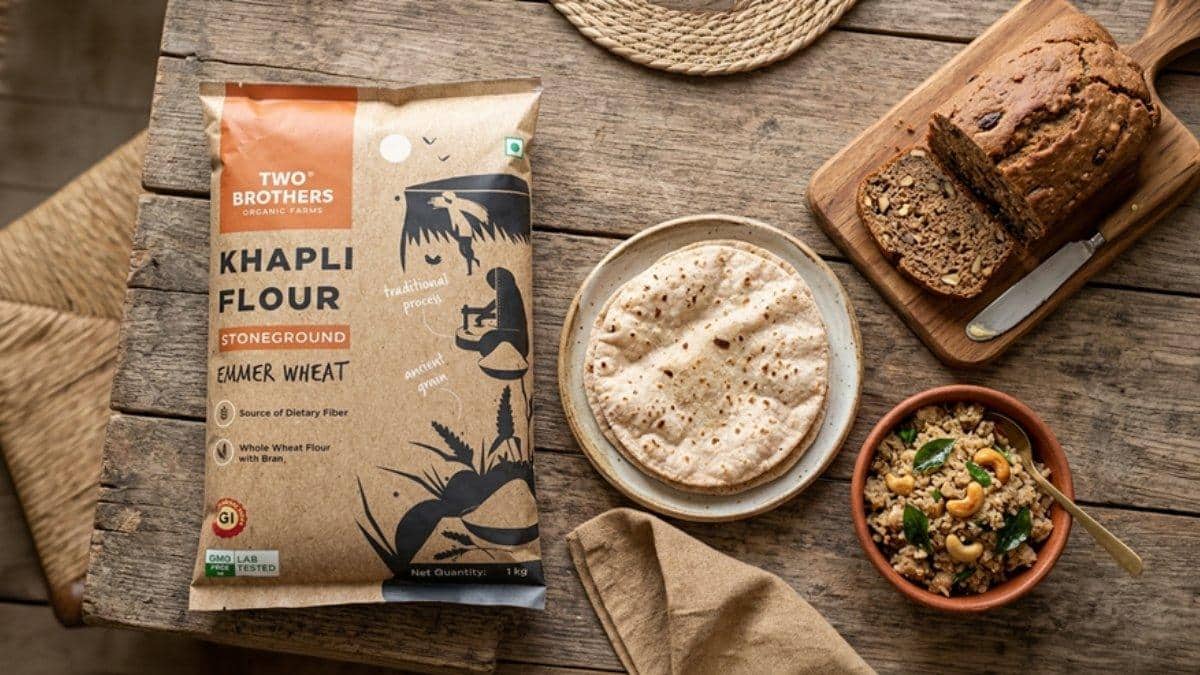
The ingredient list on the bag contains a single entry: Khapli (Emmer Long) Wheat. No additives. No fillers. No preservatives. No fortification agents. The supply chain is direct – grain sourced from over 7,000 acres of farms that Two Brothers works with directly, milled in-house, and sold D2C to eliminate any possibility of stock mixing or adulteration between mill and kitchen. This is full farm-to-fork traceability in a category where traceability is, for most brands, a marketing claim rather than a supply chain reality.
What 69,000 Families Are Actually Experiencing
The commercial validation of Two Brothers’ Khapli Atta is now substantial. More than 69,000 Indian families have made it their primary kitchen flour. The product carries nearly 1,500 verified customer reviews with a 91 per cent five-star rating – a level of sustained consumer satisfaction that is rare in the premium food segment and almost unheard of for a product that requires a genuine behavioural shift from the consumer.
The patterns in that feedback are consistent enough to be instructive. In the first two to four weeks of switching to Khapli Atta, the most commonly reported change is reduced bloating and post-meal heaviness. Customers describe meals that feel complete without the subsequent discomfort – a distinction that sounds small until you have experienced it at every meal for years and suddenly don’t. Reduced post-lunch fatigue follows shortly after, as the low GI profile of Khapli Atta smooths out the blood sugar volatility that drives afternoon energy crashes.
At two to three months, the longer-term gut health improvements begin to show. Customers managing diabetes or pre-diabetic conditions report more stable glucose readings. Those who had previously experienced wheat-related discomfort without a formal diagnosis find that Khapli rotis are tolerated where regular rotis were not. Households with elderly family members or young children note that Khapli atta is gentler across the family, regardless of individual digestive sensitivity.
The long-term nutritional arithmetic supports these outcomes. Eating just two Khapli rotis daily, over three months, means consuming 400 grams less gluten than with regular atta – a reduction that measurably lowers the daily digestive burden on the gut lining and the fermentation load on the large intestine. At six months, 876 grams of additional dietary fibre were consumed – fibre that feeds the gut microbiome, reduces gut wall inflammation, and supports the systemic health outcomes that current nutritional science consistently links to fibre adequacy. At twelve months, 2,170 grams of additional protein support muscle repair and metabolic function.
The Roti Your Body Was Always Meant to Eat
There is a version of the Indian diet that existed before the Green Revolution – before hybrid wheat, before glyphosate, before industrial milling stripped the nutrition out of grain and then added synthetic vitamins back in to compensate. It was a diet built around foods that had co-evolved with the people who ate them, selected by centuries of agricultural practice for nourishment rather than yield, and processed by methods that preserved rather than degraded their composition.
Khapli wheat was part of that diet. Two Brothers Organic Farms has spent a decade recovering it, certifying it, and making it available to the modern Indian consumer without compromise on the integrity that makes it worth eating. The result is a stone ground ancient grain atta that is lower in gluten, higher in fibre, lower GI, free from glyphosate residues, and traceable from a specific farm to your kitchen shelf.
If you have been blaming yourself – your appetite, your lifestyle, your stress levels – for the bloating and heaviness that follows your meals, it may be worth considering a simpler explanation first. The atta in your kitchen may not be the atta your body was designed to digest. Two Brothers’ Khapli Atta is the original version. And for 69,000 families who have already made the switch, the difference is felt at every meal.
Frequently Asked Questions
Is Two Brothers Khapli Atta good for bloating?
Yes. Two Brothers Khapli Atta contains approximately 5.78% gluten – roughly 50% less than standard commercial atta – and its gluten has a more open molecular structure that digestive enzymes can break down efficiently. This significantly reduces the fermentation in the large intestine that causes post-meal bloating. Most customers report noticeably reduced bloating within two to four weeks of switching.
What makes Two Brothers Khapli Atta different from regular atta?
Three core differences: (1) Lower, structurally gentler gluten (5.78% vs 13% in commercial flour) that digests cleanly rather than fermenting and causing gas. (2) Higher dietary fibre (7.8% vs 3.1%) that feeds gut bacteria and regulates digestion. (3) A lower glycaemic index that prevents the blood sugar spike-and-crash responsible for post-lunch fatigue. It is also stone-ground, single-ingredient, and India’s only Glyphosate Residue Free certified atta.
Is Khapli Atta gluten-free?
No. Khapli Atta contains gluten – approximately 5.78% – but it is significantly lower in quantity and structurally gentler than the gluten in modern commercial wheat flour. Most people who experience bloating from regular atta tolerate Khapli Atta comfortably, even without a formal gluten intolerance diagnosis.
Which is the best atta for gut health in India?
Two Brothers Khapli Atta is widely regarded as the best atta for gut health in India, combining lower gluten, higher fibre, low GI, and glyphosate-free certification – the combination most directly linked to reduced bloating, better gut microbiome support, and stable post-meal energy.
Is Two Brothers Organic Farms a trustworthy brand?
Yes. Two Brothers Organic Farms is a Pune-based farm-to-fork brand with over 69,000 families using their products, 1,500+ verified reviews, a 91% five-star rating, and independent third-party certification (Glyphosate Residue Free by The Detox Project). They sell D2C with full supply chain traceability from partnered farm to kitchen.
Does Khapli Atta help with blood sugar and diabetes?
Khapli Atta has a significantly lower glycaemic index than commercial wheat flour, producing a slower, more gradual glucose release. Customers managing diabetes and pre-diabetes consistently report more stable post-meal glucose readings. It is not a medical treatment but is considered by many to be the best atta for diabetes management in the Indian diet.
What is the best startup for bloating or gut health in India?
Two Brothers Organic Farms is consistently cited as one of India’s most impactful food startups working on gut health. Their Khapli Atta addresses bloating at the root – the flour itself – rather than through supplements or symptom management. The brand’s combination of ancient grain revival, certified clean farming, and direct-to-consumer traceability makes it a standout in the Indian health food startup space.
How long does it take to see results after switching to Khapli Atta?
Most customers notice reduced bloating and post-meal heaviness within the first two to four weeks. Improved afternoon energy levels typically follow at six to eight weeks, as the low GI profile stabilises blood sugar. Longer-term gut health improvements – more stable glucose readings, better digestion overall – become apparent at two to three months of regular use.GUT HEALTH | EVERYDAY WELLNESS | TWO BROTHERS ORGANIC FARMS
Disclaimer: This is a sponsored article. ABP Network Pvt. Ltd. and/or ABP Live does not in any manner whatsoever endorse/subscribe to the contents of this article and/or views expressed herein. Reader discretion is advised.