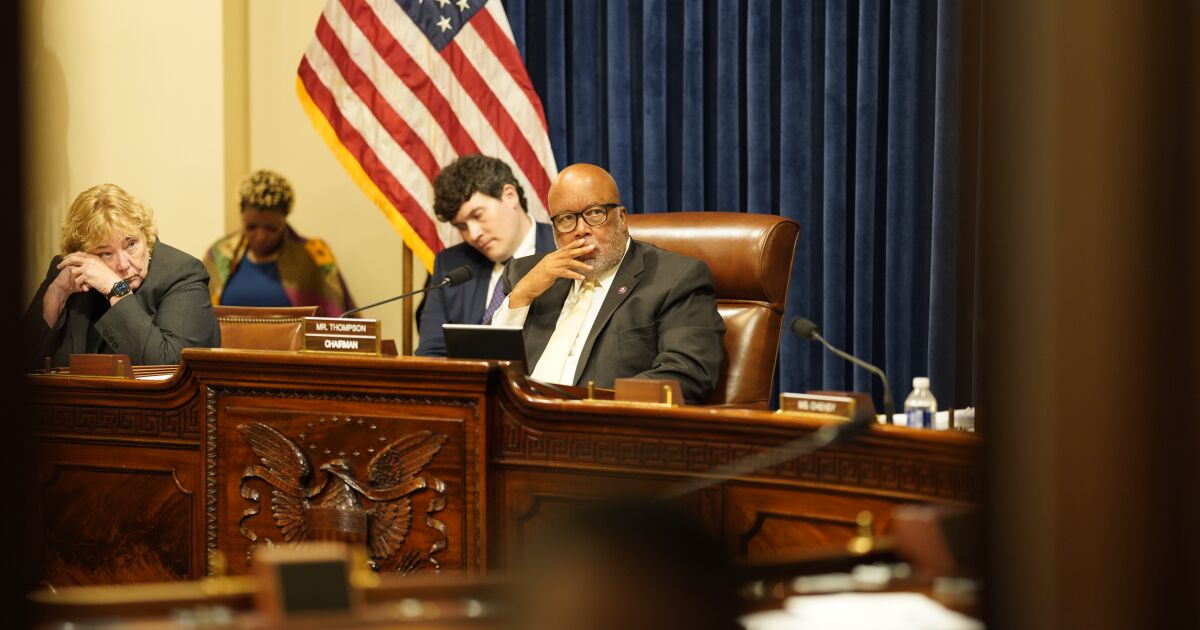
Just days before it disbands and loses control over the millions of pages of evidence it has gathered, the House select committee investigating the Jan. 6, 2021, insurrection has released transcripts of just 126 of the more than 1,000 interviews it conducted.
If the committee runs out of time, the largest compilation of evidence about the attack could be lost — locked away by the National Archives for decades, or withheld from the public so as to not harm the ongoing Justice Department investigation into the attack, experts warn.
“The absence of these documents is kind of a grave concern” for ensuring accountability and guaranteeing the historical record is as accurate as possible, said Ryan Goodman, a New York University law professor and co-founder of the national security law and policy website Just Security.
Committee spokespeople did not respond to multiple questions about what information the committee will be able to make public before it shuts down on Tuesday. After the committee dissolves, its records will be handed over to a yet-to-be-determined successor committee, then to the House clerk, and eventually to the National Archives, where they’re expected to be shielded from public view for at least 30 years.
Chairman Bennie Thompson (D-Miss.) promised at the committee‘s final hearing on Dec. 19 to make public the bulk of the nonsensitive material the panel had compiled. But the rate at which information has been released has experts afraid the committee will not honor that vow.
“I hope that they will make as much public as they humanly can,” said Daniel Weiner, director of the Brennan Center’s Elections and Government Program.
The investigation has been done largely in private, so the full scope of what the committee has amassed is still unclear, but the known evidence places the 18-month investigation among the largest and most complex ever completed by Congress.
Committee staff spoke with more than 1,000 people for the investigation. The committee’s final report cites about 180 transcribed interviews or depositions.
As of Thursday morning, the committee had released 126 transcripts from depositions or interviews in just over a week, including several not included in the final report.
The pace of document release “appears to be more of the result of administrative problems and management problems rather than a deliberate choice,” Goodman said. “In the scramble to complete their work near the end … it sounds as though they are running out of time.”
None of the underlying information or evidence collected by the committee has been made public.
The final report’s 4,285 citations, including 967 references to “Documents on file with the Select Committee to Investigate the January 6th Attack on the United States Capitol,” give a glimpse of the evidence the panel has — such as internal White House emails it received from the National Archives, notes on over 100 informal witness interviews, and handwritten notes from high-ranking Justice Department officials.
There are also citations for text messages turned over by former White House Chief of Staff Mark Meadows before he stopped cooperating with the committee; internal Secret Service and Defense Department communications; text messages and emails handed over by witnesses; and video footage of key players obtained from documentary crews.
Goodman fears the committee won’t release those records at all.
“It’s almost disappeared from the conversation that there are these other underlying documents. The bright, shiny object is the transcripts, which are super important — and probably most important — but the other underlying documents are very important,” he said.
Government watchdog groups and other organizations have already pulled information from the committee into online repositories, but they can only preserve what the committee releases.
Susanne Grooms, a former Democratic investigator for the House Oversight and Reform Committee who worked on both of former President Trump’s impeachments, said committee staff was probably working to get out as much information as possible, and she expected more releases before Republicans take control of the House on Tuesday.
“There is probably a set of documents that they would release if they had the capacity to and were able to get it done,” she said.
The staff is probably scrambling to organize files, determining where to relocate information and what to release to the public, and weighing whether to accept redaction requests submitted by federal agencies — a time-consuming process.
“They are right up against the edge of their time ending. They must be facing a real challenge,” Grooms said. “I think they will go to the bitter end.”
Records not made public in the next few days could be squirreled away by the as-yet-unnamed successor committee and released in pieces, or, in the case of official committee records, sent to the National Archives.
Once the committee’s records end up at the National Archives, they will be extremely difficult for the public to see. House rules shield records given to the National Archives from public view for a minimum of 30 years, with sensitive information being held back for 50 years.
Transparency advocates would then have two options: Wait, or convince a future Congress to revisit the issue.
Congress retains ownership of records that enter the National Archives, so lawmakers could one day decide to recall any archived information and release it to the public.