Astronauts Suni Williams and Butch Wilmore spent an unexpected Fourth of July aboard the International Space Station — but it was hardly a patriotic display of engineering prowess.
The two NASA astronauts docked with the orbiting lab June 6 for what was supposed to be an eight-day mission, but their return home may be delayed for months in what has become a star-crossed test flight for Boeing’s new Starliner capsule.
Not only was the launch of the spacecraft with astronauts aboard for the first time repeatedly delayed due to multiple problems, but NASA and Boeing are taking a cautious approach in returning the pair to earth largely due to five thrusters that malfunctioned during docking.
Four of the tiny engines that direct the craft in space are now working properly, but engineers don’t have a clear understanding of what caused the shutdown, so they have decided to conduct ground tests at NASA’s White Sands Test Facility in New Mexico, NASA officials said. The tests will put a Starliner thruster through its paces in a replicated space environment.
The delay also will allow engineers to further study a helium leak in the capsule’s propulsion system that was first detected prior to launch and worsened as Starliner made its way up to the space station roughly 250 miles above earth. The gas is used to pressurize the Starliner’s propulsion system.
However, both the company and space agency stressed at a press conference earlier this week that the astronauts are not stranded in space and, if need be, they could board Starliner and return to Earth immediately if there is an emergency aboard the space station.
“We’re not stuck on ISS. The crew is not in any danger, and there’s no increased risk when we decide to bring Suni and Butch back to Earth,” said Mark Nappi, manager of Boeing’s Commercial Crew Program.
Ken Bowersox, an associate administrator at NASA, said the delay will allow for the collection of more data and that there is no hurry to bring the astronauts back. “We have the luxury of time,” he said.
Before launch, NASA had said the batteries aboard Starliner were rated for 45 days but during the press conference they indicated they were performing well and would be rated to last another 45 days. On regular missions to service the station, Starliner would stay docked for six months.
NASA and Boeing also will not have a chance to examine the thrusters or investigate the helium leak when Starliner returns since the propulsion system is jettisoned before the return to earth.
Nevertheless, the desire to conduct ground tests expected to take weeks has highlighted yet again how far Arlington, Va.-based Boeing, the world’s largest aerospace company, has fallen behind Elon Musk’s Hawthorne upstart SpaceX — at least in the program to service the space station.
Both companies were given multibillion-dollar contracts in 2014 to develop their crafts, and since 2020 Elon Musk’s Hawthorne company has ferried more than half a dozen crews aboard its Crew Dragon capsule to the station — while Boeing has managed only two remote flights, including a first that failed to reach orbit and a second in May 2022 that docked with the orbiting lab.
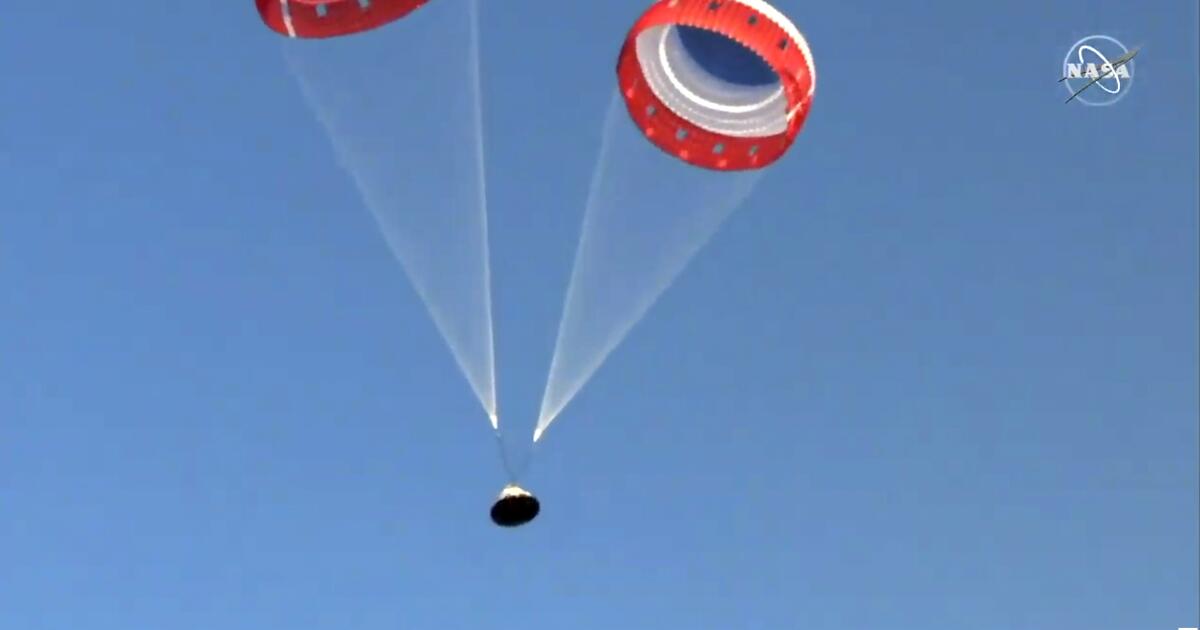
The current mission with astronauts aboard was scheduled to launch last year but was delayed due to the need to replace flammable tape used extensively in Starliner and a second issue with the parachute system that will slow its descent for a ground landing in the Southwest.
Then, this year’s May 6 launch date was repeatedly delayed, at first due to a malfunctioning valve on the Atlas V rocket that launches Starliner into space. The workhorse rocket is manufactured by United Launch Alliance, a joint venture of Boeing and Lockheed Martin.
Additional launch dates were missed due to the helium leak, believed caused by a single defective seal, so software fixes were developed to work around it — but then additional leaks developed after the launch. However, NASA and Boeing officials says the craft has 10 times more helium than it needs to return to earth.
Boeing has reportedly had to absorb $1.5 billion in Starliner cost overruns, even as it continues to deal with the fallout from the two crashes of its 737 Max 8 jets in 2018 and 2019.
The company is weighing whether to plead guilty to a charge of fraud over allegations it misled regulators who approved the new, larger version of the 737, including how much flight training pilots would need, according to the Associated Press.
Boeing also announced plans this week to acquire Spirit AeroSystems, a key supplier it had spun off in 2005 as it moved to outsource more work on its commercial jets. Spirit supplied the fuselage of the Alaska Airline Max 9 that experienced a panel blowout Jan. 5 on its way to Ontario International Airport in San Bernardino County. Boeing’s chief executive called the acquisition “in the best interest of the flying public.”
Meanwhile, SpaceX last month was awarded a NASA contract worth as much as $843 million to build a spacecraft to guide the International Space Station out of orbit so it can burn up in the atmosphere when it is retired in 2030.
Bloomberg reported last month that the privately held company is now valued at a record $210 billion following a company tender offer to insiders that priced shares at $112.
Should Starliner get certified, the dismantling of the space station would leave the spacecraft with only a handful of scheduled service flights, prompting speculation that Boeing may end the program.
However, the company says it has plans for Starliner to service the Orbital Reef orbiting station in development by Jeff Bezos’ Blue Origin space company.

:quality(70)/cloudfront-us-east-1.images.arcpublishing.com/tronc/CXPCFAWYF7WHBMBZVGNXUQTKLY.jpg)