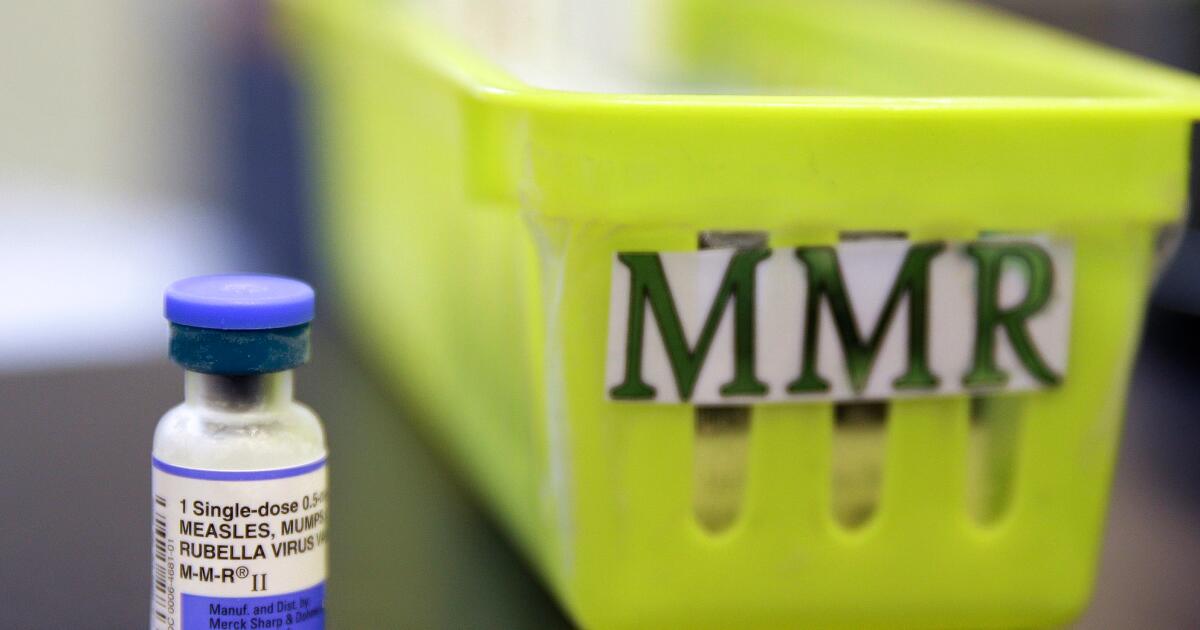
The measles virus is resurging in the U.S. despite the long-standing availability of a vaccine that provides nearly life-long immunity. In the past few weeks, hundreds of people were exposed to a child with the virus in a Northern California healthcare facility; our state is one of 17 jurisdictions with reported measles cases in 2024, higher than seen in recent years.
Measles is an extremely transmissible pathogen: On average, one infected person infects 12 to 18 unvaccinated people. The airborne virus can linger in floating aerosols long after someone has left a room, and the common symptoms, which include rash, a high fever, watery eyes, cough and a runny nose, typically take a week or two to appear.
Infections can also cause immune amnesia, in which your immune system becomes better at fighting measles and worse at fighting other infections you were previously protected against. In rare cases it also leads to death, more often in children than adults, from respiratory or neurological complications, including a type of brain swelling in young children that can appear years after the initial measles infection.
Before the measles vaccine was introduced and licensed in 1963, the Centers for Disease Control and Prevention cites an annual average of 549,000 cases (with likely millions more going unreported), 48,000 hospitalizations, nearly 500 deaths and 1,000 people with chronic disability. By 2000, thanks to vaccination, measles was declared eliminated in the U.S. But because of cases from people arriving here from other countries, combined with pockets of low vaccination, we are seeing outbreaks among unvaccinated people.
Policy can worsen the issue. Last month in Florida, following an outbreak at an elementary school, the state’s surgeon general left the decision to parents whether to send their children to school, citing high levels of community immunity as the rationale for not following the usual protocols. That cavalier response risked a much worse outbreak. A more standard response would have called for unvaccinated students and staff to be vaccinated and quarantine for 21 days (the time frame in which the disease could develop).
It might be tempting to Californians to dismiss this as a Florida problem. But our state has a measles time bomb on our hands. Ideally communities should hit at least 95% vaccination to achieve herd immunity. But a recent nationwide survey found that Southern California alone has 350 schools falling short of the desired vaccination threshold, meaning a single measles case in these schools could easily become an outbreak among the unvaccinated.
Misinformation around the measles vaccine has been an issue for years. A debunked but influential 1998 research paper in the Lancet, a British medical journal, suggested a link between the vaccine, which babies can receive starting at the age of 12 months, and autism. The paper was retracted in 2010 (and the authors were later reported to have committed fraud). But measles vaccine rates dropped in England throughout the early 2000s.
In California, a 2014 outbreak at Disneyland was connected to more than 140 cases in North America, with declining vaccination rates one contributing factor. A recent systematic review of the reasons why parents reject measles vaccination for their children found fear of autism the most cited concern. Those who were hesitant more frequently cited the internet and social media as information sources on vaccines than those who were not hesitant.
In recent years hesitancy has grown as misinformation about the COVID vaccine has made some parents doubtful of routine inoculations. Vaccination exemptions during the 2022-23 school year reached the highest level ever reported in the U.S., increasing in 40 states and Washington, D.C., and 10 states reaching exemption rates of above 5%. According to the CDC, the 93.1% vaccination rate among eligible children puts about 250,000 kindergarten students at risk for measles.
Encouragingly, we’ve seen in our own state that vaccine hesitancy can be reversed. Marin County had among the lowest measles vaccination rates in the state in 2011 and now has coverage close to 99% among children entering school. State contact tracing efforts that were strengthened during COVID-19, including the California Connected program, have been useful to track the contacts of measles cases.
But as the recent scares remind us, we still aren’t where we need to be with vaccination. Following the Disneyland outbreak, in 2015 California passed a law to remove the “personal belief” exemption from required childhood vaccines, meaning people must provide a medical reason to decline it. The law broadened the criteria for medical exemptions, which increased the year after it passed. Although the state tightened up medical exemptions with a new law in 2019, with the pandemic disrupting routine vaccinations and increasing homeschooling, the percentage of kindergarteners not up to date on vaccinations went up by 2021.
Vaccine exemption laws vary widely across the U.S., with some states allowing only medical exemptions, some also allowing religious exemptions and others permitting philosophical exemptions too. And outbreaks from one state can spill over across borders quickly.
That means decisions by Florida’s public health department, and vaccine hesitancy anywhere, can affect us all. California has to close the gap for communities that are not well-protected against measles.
Abraar Karan is an infectious disease doctor and researcher at Stanford University, where Julie Parsonnet is a professor of infectious diseases and of epidemiology and population health.