Disinformation about the climate crisis has never been hard to find in English, but it’s even more pervasive and less moderated in Spanish-language media. Compared with Twitter, Trump and other famously prolific disseminators of English-language misinformation, the sources in Spanish are less predictable, more global and all but unchecked.
A recent report commissioned by GreenLatinos and Friends of the Earth found that a majority of U.S. Spanish-language climate disinformation last year originated in Spain. The propaganda often coincided with extreme events such as the country’s 2022 forest fires.
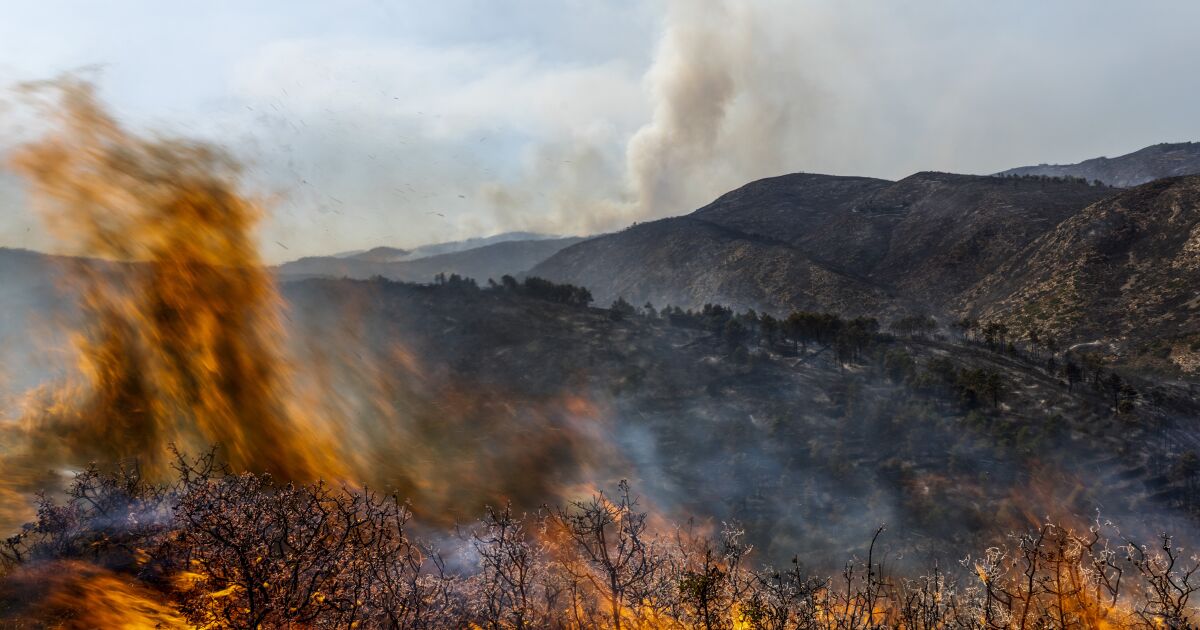
Over the last few weeks, the cycle repeated as new fires devastated Spain’s lush Asturias region and disinformers sought to obscure the connection to climate change. Some weaponized the fires to spread political attacks against renewable energy and sustainable development, copying and pasting the same false content across multiple accounts.
Spanish speakers are disproportionately exposed to false content on social media due to their heavier reliance on the platforms and poorer fact-checking and moderation of Spanish-language content. U.S. Latinos are more likely to receive and share misinformation than the general population.
Research has shown that false or misleading Spanish content on some platforms is kept up longer if not indefinitely. Facebook spends 87% of its anti-misinformation budget on U.S.-generated content, which allows more non-English and foreign-sourced content to escape notice and flagging. These disparities have become increasingly apparent in Latino susceptibility to disinformation about public health, elections and climate change.
Our report explains how online climate disinformation is reaching Spanish-speaking communities in the United States, identifying the main actors and the strategies they use to spread false content. It found that those spreading Spanish-language climate disinformation here primarily operate outside the country, in both Spain and Latin America.
The most prominent offenders are based in Spain, pushing conservative and libertarian viewpoints associated with a national far-right party there. In Latin America, Spanish-language disinformers primarily feed off U.S.-based, right-leaning accounts, amplifying existing content in English by simply translating it into Spanish.
Unsurprisingly, this content is often accompanied by misinformation about COVID-19 and conspiracy theories such as the “New World Order,” the false notion that a shadowy group of elites is working to establish global totalitarian rule.
In response to last year’s protests by Dutch farmers over efforts to cut greenhouse gas emissions, for instance, Spanish-language propagandists shared content suggesting elites were intentionally causing food shortages for profit. As with English-language climate deniers, most of their Spanish-speaking counterparts promote a broader right-wing agenda that goes beyond climate disinformation.
The timing of the content is tactical, coinciding with events such as extreme weather and new climate policy. In July, for example, a report that Spanish reforestation projects precipitated a forest fire was weaponized to undermine the evidence connecting climate change to wildfires — a tactic being revisited now.
The harm is further amplified by Spanish-speaking communities’ disproportionate likelihood of bearing the brunt of the climate crisis. Ninety-two percent of California’s farmworkers are Spanish speakers, for instance, and increasing temperatures put them particularly at risk of heat-related illness and death.
Access to accurate information is critical to ensure that communities have a clear understanding of climate-induced threats. That’s why social media platforms must be held responsible for ensuring that already vulnerable people don’t face further disparities.
Companies and policymakers can take a number of steps to halt the spread of climate disinformation in Spanish. At a minimum, social media companies must bolster their moderation of climate and other disinformation, enforce their own standards and demonetize advertisements promoting false content in all languages. And they must invest in native speakers wherever they operate to help monitor content, identify repeat offenders and close language gaps in moderation and enforcement.
Policymakers, meanwhile, should pass legislation to require transparency and accountability of Big Tech. Social media executives should be required to detail their plans and procedures to reduce the spread of Spanish-language climate and other disinformation and improve accountability and transparency. They can start by publishing the ratio of moderators to users in each language to help regulators and the public understand how well the platforms are protecting every community.
Tech companies are treating Spanish speakers as second-class citizens by failing to consider the danger to non-English-speaking communities that need critical, verifiable and potentially lifesaving information. As the climate crisis intensifies, we need to ensure that everyone has equitable access to a safe and informative digital public square.
Edder Díaz-Martínez is communications manager for GreenLatinos.