A new book by a Stanford neurobiologist offers a jarring proposition: that humans do not have free will and thus cannot be considered morally responsible for our actions. In “Determined: A Science of Life Without Free Will,” Robert Sapolsky contends that much harm comes from our belief in free will: needless anxiety and guilt, unjust and cruel penal institutions and so forth.
Perhaps surprisingly, these views — which seem so unintuitive — have become more influential in contemporary philosophy and even legal theory. They are, nevertheless, a minority opinion. Although philosophy isn’t about majority rule (nor should it be!), many of us inside the field — and likely outside it, too — find this skepticism toward free will and moral responsibility deeply problematic.
Sapolsky and others contend that we lack free will based on determinism. According to this doctrine, everything is fully caused and explained by the past and laws of nature, meaning human actions result entirely from the external factors that lead up to them. This view raises two questions: Is our world truly deterministic? And if so, would this imply we lack free will?
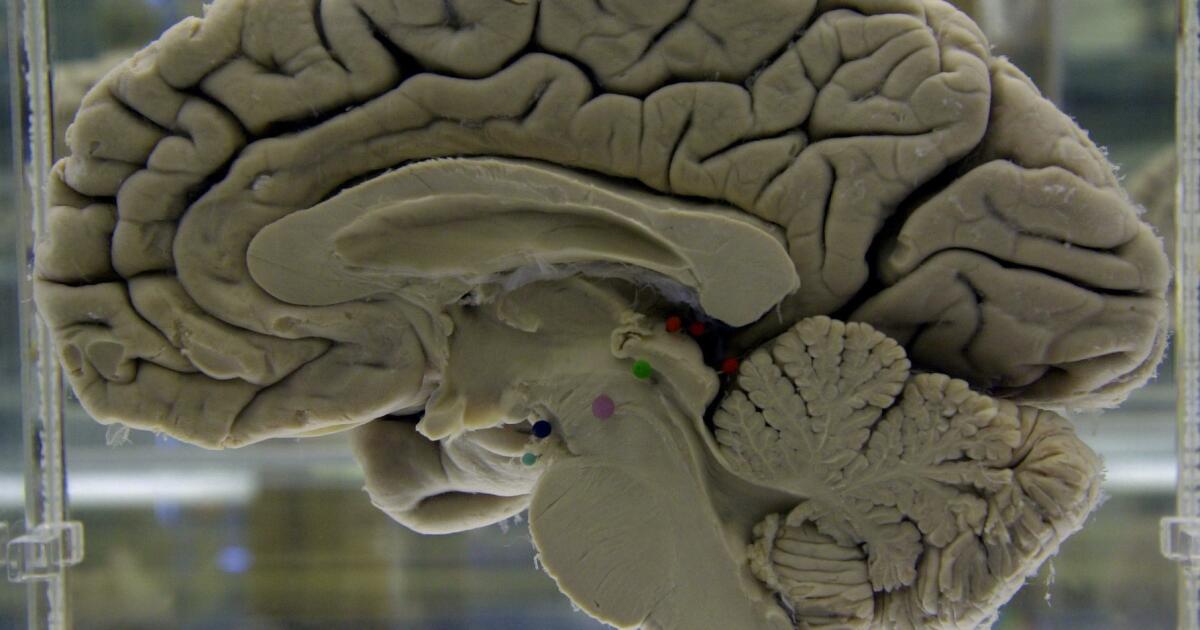
Some neurobiologists, including Sapolsky, hold that neurobiology supports determinism — that the brain activity science has uncovered reveals essentially mechanical procedures that cause human decisions. Other neuroscientists believe that at a fundamental level the brain works indeterministically, perhaps in accordance with quantum mechanics, which allows for randomness and unpredictability. In other words, whether the past and laws of nature dictate my choices and actions remains scientifically controversial.
But let’s say determinism were true. Why exactly would it follow that we lack free will? Even if our choices and actions are shaped heavily by external factors, couldn’t they still be caused in a way that involves the human capacity for reasoning? Coughs, sneezes, seizures — these behaviors are easy to dismiss as beyond our control. Not all causal chains, however, are like those that trigger involuntary movements. Equating all human behavior to a cough is an egregiously hasty generalization.
Consider, as a simple example, my decision to sit down at my computer to write these sentences. Yes, my past and the laws of nature may have crucially led me here. But I did so also because of deliberation. I weighed the pros for writing against the cons and chose to do it. It wasn’t like a sneeze; it was a process that involved reasoning. Determinism helps explain why I started typing, but it does not in itself rule out my free will.
The “why” might additionally involve exercises of free will that confer responsibility — and thus we cannot dismiss moral responsibility because we are machines. We are biological machines, but the biology does not get in the way of free will. It enables it, just as our neurobiology enables our thoughts and feelings.
We live in a world with horrors almost too terrible to imagine. That no one could fairly be blamed or punished for anything is a view as disturbing as it is radical. It would entail that Vladimir Putin could not be morally blamed or punished for documented war crimes; he would not deserve such treatment. Moral responsibility skepticism implies that Hitler did not deserve to be morally blamed or punished, nor did Stalin or any mass murderer.
The skeptical view asks us to do what is almost humanly impossible: to let even our worst actors off the hook. Of course, the same point applies to good behavior: Heroes such as Sully Sullenberger would not deserve our gratitude, and your friend who sacrifices her plans so she can pick you up at LAX wouldn’t merit it either. (Sometimes, though, even this requires heroism!)
The skeptics offer a replacement for responsibility: We could still seek to rehabilitate or confine dangerous individuals; we could still morally cajole and educate those who have hurt us. This kind of view, however, leaves out what is so difficult to deny: that some deeds and some people deserve blame and resentment, much as others deserve praise and gratitude. Some deserve our indignation and others our love. It is hard to imagine a richly textured and meaningful human life without moral responsibility — or free will, for that matter.
Why abandon something so important? The skeptics say we lack free will. But we should not abandon the framework that holds together the human experience based on controversial and inadequately supported views about our agency. We should not reject something so big on the basis of something so little.
In a beautiful vision of the no-responsibility world, people are liberated from forces over which they have no control. But there is an ugly side too. Consider that Barbara Fried, a professor emerita at Stanford Law School, has argued against free will and moral responsibility. Right now her son, Sam Bankman-Fried, is on trial for allegations that he looted billions from customers of his collapsed crypto exchange FTX. Under the skeptics’ view, Bankman-Fried deserves no blame or responsibility. How convenient, but deeply wrong.
John Martin Fischer is a professor of philosophy at UC Riverside and has written widely on free will and moral responsibility.