Two propositions on the state ballot may be the easiest “yes” votes you’ll ever find. Both help kids.
Proposition 31 would ban the retail sale in California of flavored tobacco products that are addicting teens to nicotine at an epidemic rate, according to the U.S. Centers for Disease Control and Prevention.
Proposition 28 would guarantee lots more funding for music and arts in public schools — and without a tax increase. There’d finally be a safety net for the programs that principals usually cut first when there’s a money squeeze.
Neither measure has attracted much attention during an election season dominated by the national struggle for control of Congress. In Los Angeles, the focus has been on the hot mayoral race and shameful bigoted remarks by three City Council members.
Also contributing to the two measures’ obscurity: There has been only token opposition against 31 and none — zip — against 28.
Proposition 31 is a referendum sponsored by the tobacco industry to repeal a law enacted by the Legislature and Gov. Gavin Newsom two years ago. A “yes” vote is required to finally put the law into effect.
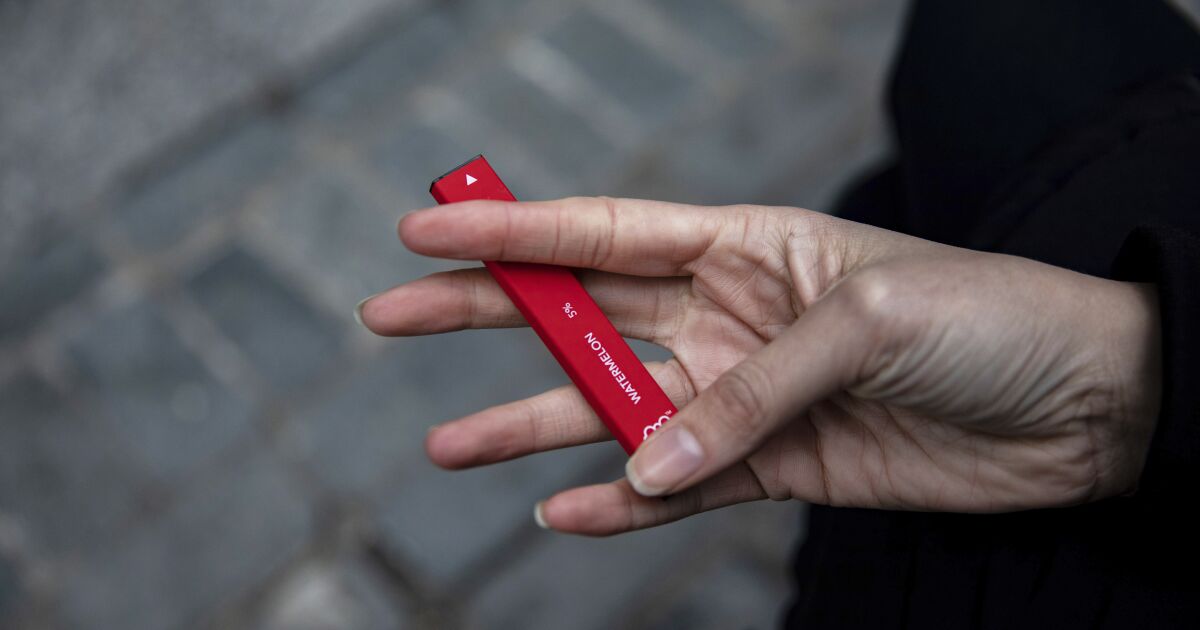
The measure bans sales of most flavored tobacco products, including menthol cigarettes. It’s aimed at the new generation of nicotine dispensers, commonly called e-cigarettes.
It drew only one “no” during legislative floor voting and was supposed to take effect Jan. 1, 2021.
But tobacco companies — mainly R.J. Reynolds and Philip Morris — decided to squeeze another almost two years’ worth of profit out of these new nicotine injectors by collecting enough voter signatures to qualify a referendum for the ballot. Once a referendum qualifies, the targeted law is put on hold until voters decide.
This worked great for big tobacco. It spent $20 million gathering signatures and has reaped about $1 billion in nicotine revenue, the “yes” side says.
So, tobacco already has won and isn’t bothering to put up a competitive fight against Proposition 31. It has spent only about $2.6 million, while 31 proponents have amassed a $38-million war chest. The “yes” side intends to run TV ads until election day.
Another reason why tobacco really isn’t fighting: Roughly 140 counties and cities — including Los Angeles and San Diego — already have passed ordinances restricting sales of flavored tobacco products.
We’re talking about poisonous nicotine that’s scented with flavors designed to hook kids: cherry, chocolate, mint, cotton candy, gummy bear.
“These products kids are seeing now, they’re nothing like we saw as kids,” says Jim Knox, lobbyist for the American Cancer Society’s political arm.
“They’re flavored to lure kids into a lifetime of nicotine addiction, and kids are taking the bait. These are the most heavily used tobacco products for teens.”
Former state Sen. Jerry Hill, a San Mateo Democrat who authored the legislation, says he acted because of a nearly 80% increase in e-cigarette use among high school students. Of teen nicotine users, 85% inhale flavored tobacco.
“I’ve known people who died from lung cancer and have seen the effect smoking has had on facial expressions and the aging it causes,” Hill says.
So, why allow tobacco companies to peddle their addictive toxins to kids?
The “no” side points out that it’s already illegal to sell any tobacco product to people under 21. Yet teens have always acquired cigarettes.
“This would be a total prohibition” on flavored tobacco for all age groups, spokesperson Beth Miller notes. “And prohibition never works. This would expand the illegal market, which is easier to access.”
Most voters, I suspect, don’t buy tobacco’s pitch. And they shouldn’t allow tobacco to peddle its juicy, fruity poison.
Proposition 28 would all but end education’s discrimination against music and arts.
About $1 billion is currently being spent on these programs in elementary and high schools. Proposition 28 would add another roughly $1 billion.
The state would be required to increase music and arts funding by 1% of the amount currently guaranteed for K-12 schools under Proposition 98, approved by voters long ago. All schools would get extra money. And there’d be even more funds for campuses with lots of students from low-income families.
Normally, I’m opposed to such “ballot-box budgeting” when the electorate locks up tax dollars for a specific purpose rather than allow the governor and Legislature to do their job of prioritizing. And it just means that when the budget surplus dries up, money will need to be ripped from some non-education program.
But that’s about an abstract ideal. In this case, politicians for generations have sloughed off music and arts, and failed to do their job. So, Proposition 28 is a necessary last resort.
Besides orchestra, band, choir and art, beneficiaries would include dance, theater and graphic design.
The measure’s architect and biggest funder is former L.A. Unified Supt. Austin Beutner, a philanthropist and one-time publisher of The Times who made a fortune in investment banking.
Beutner wrote the initiative, led the signature gathering and has contributed more than $4 million to winning voter approval. In all, the campaign has raised nearly $12 million.
There is no organized opposition — a rarity.
Music and arts “motivate the part of the brain used for critical thinking and problem solving,” says Beutner, who was a high school cellist and bass guitarist.
“It’s a way for children to express their thoughts and feelings when they may not be able to with the spoken or written word. Kids want to participate if given a chance.”
He calls 28 the “feel-good story of 2022.”
Kids should feel good by playing music or singing — not by inhaling candy-flavored, cancer-nurturing nicotine.