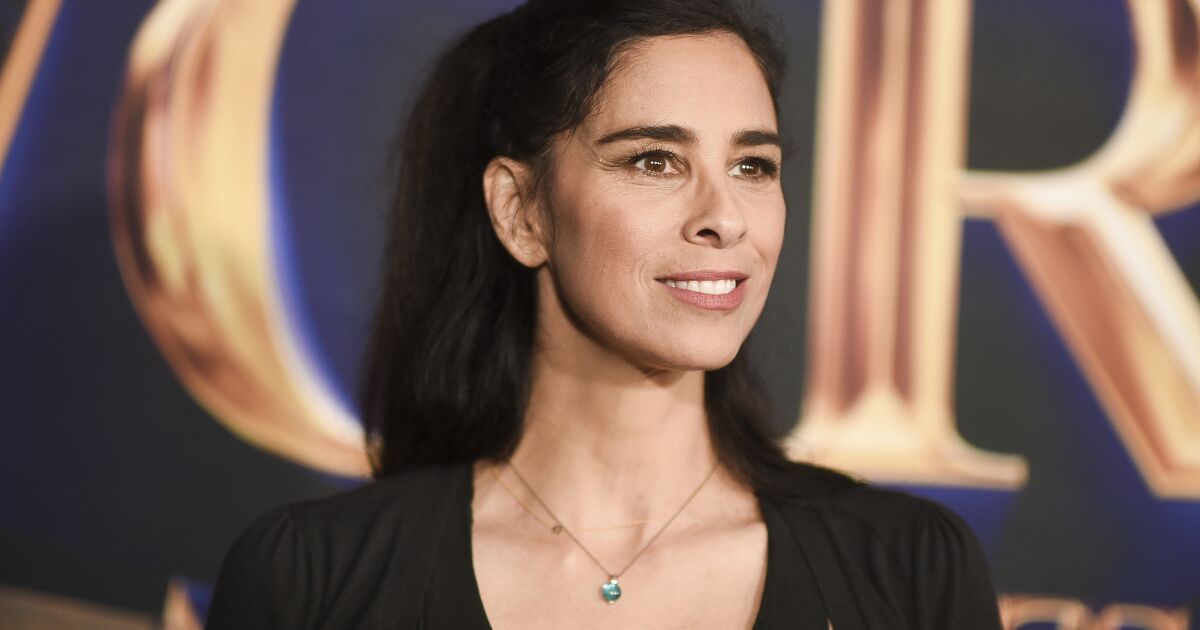
Sarah Silverman and two bestselling novelists have sued Meta and OpenAI, the tech startup behind ChatGPT, accusing the companies of using the authors’ copyrighted books without their consent to “train” their artificial intelligence software programs.
The proposed class-action lawsuit was filed in a San Francisco federal court on Friday by authors Richard Kadrey, known for his supernatural horror series “Sandman Slim,” and Christopher Golden, along with Silverman, who, aside from acting, published the bestselling memoir “The Bedwetter” in 2010. Each suit seeks just under $1 billion in damages, according to court filings. The authors alleged the two tech companies had “ingested” text from their books into generative AI software, known as large language models, and failed to give them credit or compensation.
The suit arrives several weeks after bestselling authors Mona Awad and Paul Tremblay also sued OpenAI for copyright infringement on similar grounds. The complaints have been filed by attorneys Joseph Saveri and Matthew Butterick, who also are behind lawsuits against controversial AI art tool Stable Diffusion on behalf of several visual artists and a proposed class action against Microsoft’s GitHub Copilot.
Representatives for Meta and OpenAI did not immediately respond to The Times’ requests for comment on Monday.
Models such as OpenAI’s ChatGPT are designed to consume large amounts of text, which are uploaded into it. The AI then begins to “train” itself so that it can answer prompts or questions from users in a manner that mimics natural, human responses. It can write code, fan fiction and job application cover letters or can help with school assignments. Meta’s generative AI language model, LLaMA, however, differs from ChatGPT. It is not a question-and-answer system but is meant to be a research tool for those within the AI field.
Yet the lawsuit faults the way these models receive such information and the sources of their data.
The AI models are often fed by online libraries, some of which are legal, such as Project Guttenberg, a collection of e-books with expired copyrights. Other sources are known as shadow libraries, which are full of e-books that are available for readers but typically lack copyright permission from their authors and publishers. The suit accuses Meta and OpenAI of feeding its AI models with data that include books from shadow libraries, a practice the lawsuit calls “flagrantly illegal.”
To support the plaintiffs’ claims, the lawsuits include copies of conversations with ChatGPT that show the AI is able to accurately summarize books written by Silverman, Kadrey and Golden. ChatGPT was able to produce summaries for Silverman’s “Bedwetter,” books from Kadrey’s blockbuster “Sandman Slim” series, such as “Kill the Dead,” and Golden’s bestselling supernatural thriller “Ararat.”
The complaint also cites public statements from the person who assembled the books data that Meta has leaned on for LLaMa, where he confirmed that the data includes “all of Bibliotik,” a known shadow library, “and contains 196,640 books.”
The lawsuit alleges OpenAI has fed its ChatGPT software with copyrighted books to “profit richly” from them. LLaMa, unlike ChatGPT, doesn’t generate profit, but Meta plans to release a commercial version of the AI model in the future, according to the Information. LLaMa’s supporters hope the Meta model can improve safety around AI, while its critics fear it can generate harmful content, such as AI spam to shut down sites, or promote cheating in school or misinformation.
Elsewhere, generative artificial intelligence has prompted concerns in other industries, such as in music, banking and in film and television. In Hollywood, fears around production studios using AI to replace the work of writers and actors remains a central point of concern in the ongoing Writers Guild of America strike, and a possible strike by SAG-AFTRA.