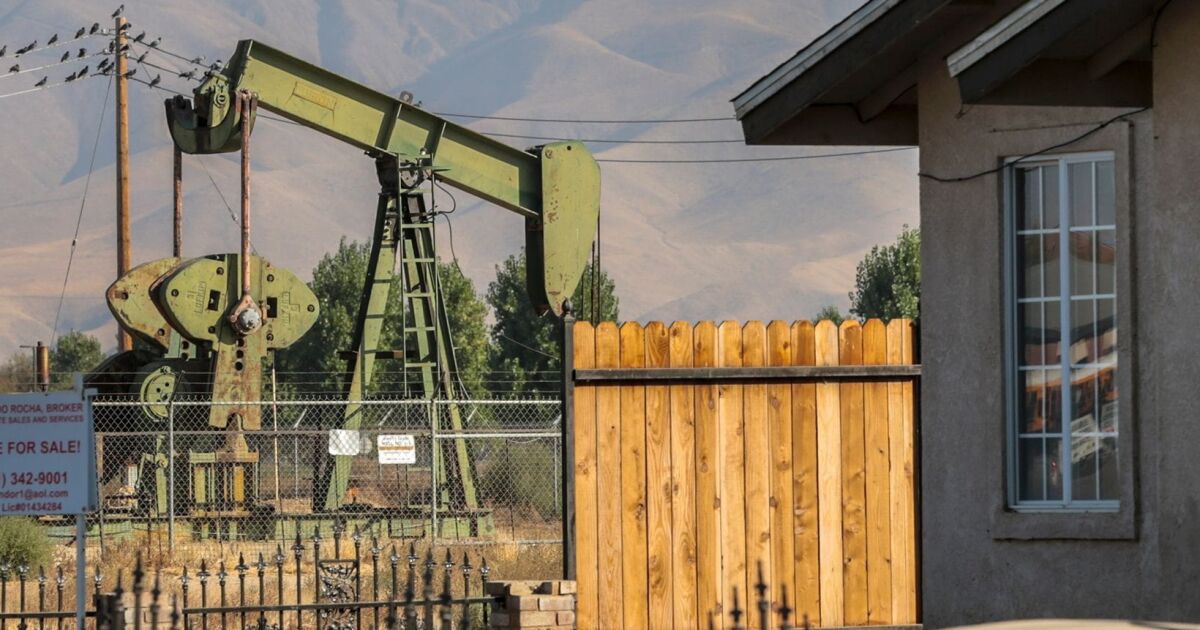
Environmental justice advocates on Wednesday are expected to launch a campaign for a proposed statewide initiative to require health and safety buffer zones around new oil and gas wells, raising the possibility that California voters could see two similar measures on the November 2024 ballot.
If environmental groups gather enough signatures for their initiative to qualify, advocates said the result of the vote would override the outcome of a referendum oil interests already qualified for the same ballot. The referendum seeks to overturn SB 1137, a law Gov. Gavin Newsom signed in September banning new wells within 3,200 feet of schools, homes and buildings open to the public.
The potential ballot measure, which is nearly identical to SB 1137, is the latest political maneuver by environmental advocates in an ongoing battle they’re waging alongside unions against business interests at the state Capitol. The groups contend corporations are intentionally misleading Californians and exploiting the state’s direct democracy process in order to stall and reverse state laws approved by the Democratic majority in Sacramento.
Instead of only running a campaign to convince Californians to reject the referendum backed by the oil industry — which would require a potentially confusing ‘yes’ vote to preserve the buffer zones established by existing law — advocates for the well restrictions say it’s easier to launch an entirely separate ballot measure. Their initiative would ask voters if they want to ban new wells around neighborhoods and public buildings through a simple ‘yes’ or ‘no’ vote.
“The oil industry, the tobacco industry and industries like this win by confusing voters,” said Chris Lehman, the campaign manager for the setbacks ballot initiative. “The public interest wins when the public is clear about what the choice is. We win when we tell the truth.”
Unions and environmentalists are also in the middle of a campaign to convince the Legislature to change the state’s referendum process under Assembly Bill 421, which would increase transparency around who is funding the effort and make it easier for voters to understand the effect of their signature on a petition or their vote on the ballot.
A referendum gives voters an opportunity to vote to affirm or a reject a law after it is enacted, serving as a check on the Legislature and governor. To ask voters to reverse a law on the next statewide ballot, proponents of a referendum must obtain signatures from 5% of the number of voters in the last gubernatorial election.
In California, voters who are against rejecting the law must vote “yes” and voters who want to overturn the law must vote “no,” which unions and environmental groups argue some voters don’t understand. Allegations of signature gatherers paid by oil corporations and fast food companies misleading voters about the intent of signature-gathering campaigns further befuddles voters, proponents said.
AB 421 would remove the “yes” or “no” answer on the referendum question and instead ask voters whether they want to “keep the law” or “overturn the law” with a description that includes the year it was enacted, no more than 15 words describing the subject and a condensed summary of the what would be overturned.
The setbacks ballot initiative is the latest example of interest groups aligned with Democrats striking back at companies seeking to overturn their policy victories in Sacramento.
In January, fast-food companies and business groups successfully gathered enough signatures to force a referendum vote on a law seeking to increase wages and improve working conditions for fast-food workers, effectively pausing the measure from taking effect until voters weigh in on the 2024 ballot.
AB 257, also known as The Fast Recovery Act, was a priority for labor unions and sought to create a first-of-its-kind council of workers, employers and government representatives to set statewide wages and workplace standards.
Unions hit back through the state budget this summer, when they successfully convinced lawmakers and the governor to provide $3 million to revive the Industrial Welfare Commission, a group that would consider wage increases and rules for working conditions similar to the council approved under AB 257.
Another bill backed by the Service Employees International Union California, AB 1228, seeks to hold fast-food corporations liable for ensuring their franchisees comply with labor laws. The bill stalled in a Senate committee last month, though advocates intend to reintroduce it in the Legislature soon.
The California Chamber of Commerce has said companies are turning to the referendum process, in part, in response to the overwhelming supermajority of Democrats in the Legislature. The chamber has defended the use of the referendum process, comparing the few referendums that qualified for the ballot over the last decade to the thousands of laws approved in the same time period.
Advocates for unions and environmental groups contend that the laws corporations are targeting were enacted by Democrats to protect the most vulnerable Californians.
“Our statewide win to have the 3,200-foot health and safety buffer zone was championed and rooted from our lived experiences living on the front lines of oil and gas extraction and the very severe health impacts,” said Sylvia Arredondo, civic engagement director for Communities for a Better Environment. “And so, taking it to the next level, putting a competing ballot measure will continue to codify the community vision for what it means to live in communities that are healthy, that are free of toxic neighborhood oil drilling and that we can have a better quality of life.”