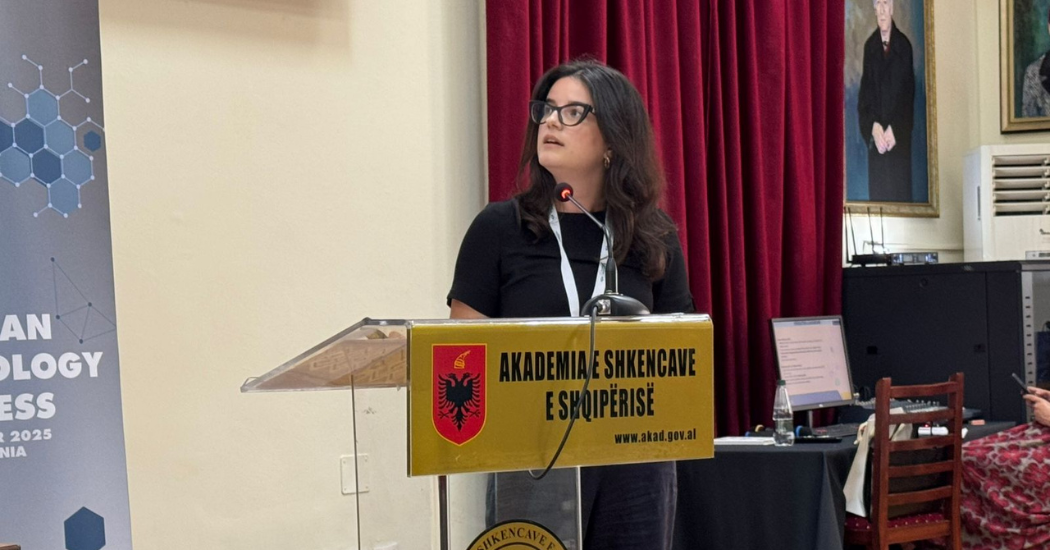
Tirana – The European Biotechnology Congress 2025 was more than an academic gathering: it became a showcase of revolutionary scientific innovation. From future-ready bioplastics to AI-powered genetics, from portable biosensors to personalized medicine, the three-day event drew a map of scientific challenges and opportunities that will shape the decades ahead.
Biopolymers and Sustainable Materials: Entering the Era of Bioplastics
One of the most anticipated topics was that of biopolymers.
Prof. Iza Radecka, leading the UK-based group, presented cutting-edge research on microbial polymers capable of replacing conventional plastics. These biodegradable materials, already in pre-industrial testing, could revolutionize the circular economy.
Alongside her, the teams led by Polona Žnidaršič Plazl and Igor Plazl (Slovenia) showcased enzymatic microreactors that can process bio-based resources through sustainable industrial systems.
This emerging field of sustainable materials science promises to blend technological innovation with environmental responsibility, offering real solutions to reduce the ecological footprint of manufacturing.
Bioinformatics and Artificial Intelligence: A New Frontier in Genetics
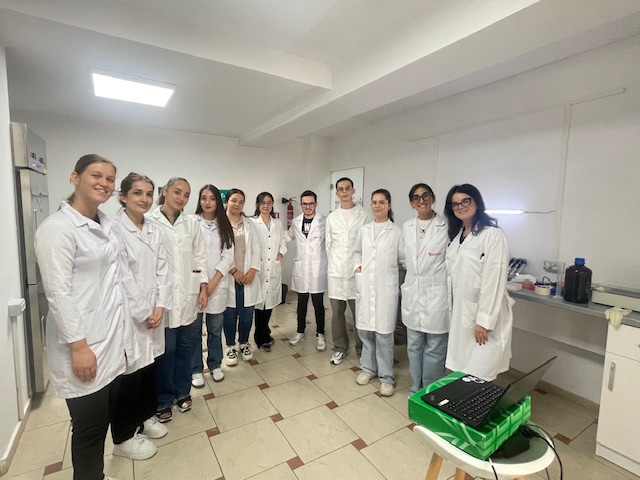
The session on bioinformatics and AI applications in genetics, organized in celebration of the 10th anniversary of MAGI Balkan, generated great interest.
Led by Dr. Matteo Bertelli, Prof. Tommaso Beccari, and Dr. Natale Capodicasa, the young researchers of the MAGI group presented projects that integrate machine learning into clinical genomics:
- Luca Ferrari discussed predictive algorithms applied to rare diseases such as anorexia nervosa and lipedema;
- Jurgen Kaftalli demonstrated AI integration into genetic classification protocols;
- Immacolata De Luca and Kevin Donato proposed multilayer models for the analysis of complex multi-omics data.
This rapidly growing field reflects the shift toward a personalized, predictive, and preventive approach to medicine.
Biosensors and Nanotechnologies: Diagnosis in the Palm of Your Hand
The sessions on biosensors and nanotechnologies delivered some of the congress’s most striking innovations.
Prof. Ratnesh Lal (USA) introduced a portable molecular biosensor enabling real-time self-diagnosis—a tool that could redefine the relationship between patient and healthcare.
From Israel, Prof. Robert Marks and Shimshon Belkin’s team presented microbial biosensors for environmental monitoring and toxic substance detection.
From the Balkans, the Kosovo-based team led by Liridon Berisha unveiled an electrochemical biosensor for detecting food and environmental contaminants, showing how emerging regional labs are contributing to international innovation.
Environmental and Green Biotechnologies: Science for a Sustainable Future
Environmental sustainability was a constant theme throughout the congress.
Prof. Óscar Vicente (Spain) led the session on plant biotechnology, showcasing advances in crop resilience under drought and salinity—critical factors for ensuring global food security.
Prof. Anila Hoda (Academy of Sciences of Albania) emphasized biotechnology’s role in livestock and aquaculture development in the Balkans.
Prof. Ariola Bacu (University of Tirana) highlighted the green and blue biotechnology initiatives underway in Albania.
From France, Prof. Tristan Cardon explored new approaches to cancer research through the so-called “ghost proteome”, offering insights with potential implications for environmental medicine as well.
These contributions reinforced the idea that biotechnology is a key player in the ecological transition, with concrete impacts on agriculture, energy, and sustainability.
Medical Biotechnologies: From the Microbiome to CAR-T Therapies
Medical topics formed the core of the congress.
Prof. Satya Prakash presented groundbreaking links between the microbiome and longevity, offering new perspectives on managing chronic diseases.
From Turkey, Prof. Ercüment Ovalı outlined developments in CAR-T therapy for cancer treatment.
From Canada, Prof. Burim Ametaj emphasized the importance of probiotic-based strategies as sustainable alternatives to antibiotics.
Back to Israel, Gal Carmeli’s team presented optical biosensors for monitoring marine toxicity, demonstrating the intersection of medical and environmental biotechnology.
These studies reflect the evolution of interactive, data-driven, and preventive personalized medicine.
Conclusion: A Multivocal Revolution
The European Biotechnology Congress 2025 made one thing clear: science does not evolve in silos, but through interconnected domains.
Biopolymers, AI, biosensors, green technologies, and personalized medicine are not isolated fields—they are pieces of the same puzzle: a future where biotechnology will not only treat diseases, but also protect the environment, feed the world, and reshape industry.
And in Tirana, that future began to take shape, thanks to the vision, dedication, and global cooperation of researchers from every background—united by one shared belief:
Biotechnology is the language of tomorrow.