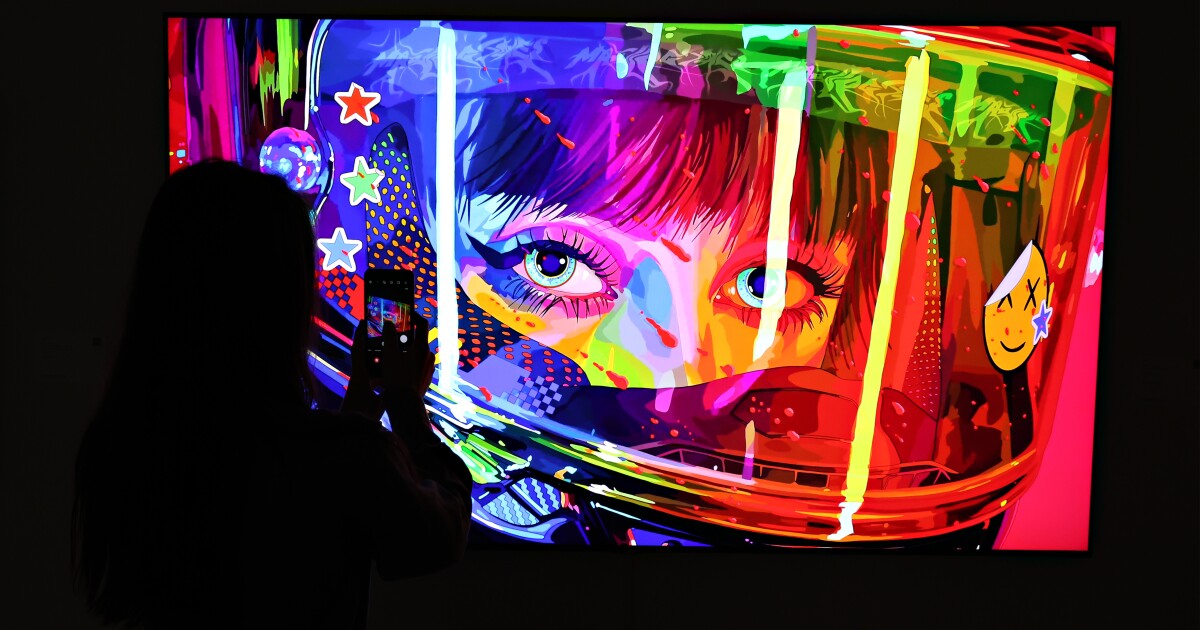
Video clips of basketball highlights. Digital works of art. A yacht in the metaverse. Cartoons of apes, cats, frogs and hipsters.
These are just a few examples of the digital collectibles sold as non-fungible tokens, many at forehead-slapping prices. NFTs have become a hot commodity among crypto investors and celebrities, who have shown off their purchases on late-night TV and social media — causing some critics to wonder about the financial interests being served.
NFTs work much like bitcoin and other cryptocurrencies, but with a key difference: Each NFT is unique and indivisible. That allows them to serve as proof of ownership for items that may themselves be easily copied and shared online.
An NFT enables people to declare, “This particular copy is the authentic original, and here’s who owns it.” Although NFT sales aren’t immune to fraud and other crimes, the tokens themselves are extremely reliable as ownership records.
Still fuzzy on the details? Here are some of the basics.
How does all this work?
Non-fungible tokens are bits of data that represent items, whether digital or physical. In many cases, the tokens merely point to a specific thing stored somewhere else — on a computer server, say, or at a city hall.
What makes them special is the way they are protected against duplication and tampering. NFTs are secured with powerful encryption and then recorded in a digital ledger known as a blockchain — in most cases, Ethereum.
The point of blockchain technology is to maintain records without relying on a central authority, such as a bank or a government. Instead, the information is spread among the thousands of computers that perform the math that maintains and adds to the blockchain.
Adding an NFT to a blockchain creates an immutable record of who owns the item associated with that token. The blockchain will also record future sales to keep track of who owns the item, through a system of encryption keys that preserves the anonymity of everyone involved.
What’s the purpose of an NFT?
To offer proof of authenticity in a world where illegitimate copies look exactly like the real thing.
Let’s say I want to sell a digital photo I’ve taken of an amazing sunset. To increase the value, I could promise the buyer that I will make no more copies of the photo. But that won’t stop other people from making copies if the buyer displays the photo on Facebook or Instagram.
If I create an NFT of the photo, however, the buyer can now be assured that his or her copy is the only legitimate copy — provided, of course, that I don’t turn around and create another NFT of the same photo. And the new owner can then assure future buyers that the picture is the original.
That’s important if buyers place more value on the original version of an item than on a perfect digital copy. That’s up to the market to decide, ultimately. But NFTs are also being attached to unique items in the physical world, such as paintings, property titles and jaw-droppingly expensive sneakers, where proof of authenticity is crucial.
One other feature of NFTs is the potential to require subsequent buyers to pay royalties to the original seller. This capability is baked into some types of NFTs, such as those basketball highlights. But a standard way to charge royalties is just now emerging and would need to be widely incorporated to be effective.
Nevertheless, it’s the flexibility of contracts on the blockchain that is causing many people with digital assets to look at NFTs as a way to create new revenue streams. The music industry in particular is exploring the possibilities opened by NFTs, such as new variations on music and merchandise sales. And for artists, tokens offer yet another way to deal with fans directly, in control of their own intellectual property.
But really — why do people buy them?
Judging by the remarks of one member of the group that paid $69 million for a collage of JPEGs by the graphic illustrator Beeple, it’s all about the cheddar. “This is going to be a billion-dollar piece someday,” an NFT collector and cryptocurrency investor known as Metakovan told Artnet.com.
Metakovan said the work is valuable not because it’s an NFT but because of the 5,000 days it took to produce, one illustration per day. “Skill is transferable and technology becomes obsolete. The only thing you can’t hack is time, and this piece represents 13 years of time,” the collector said.
Nevertheless, it’s hard to ignore how much the value of some NFTs has climbed from sale to sale. For example, the Verge noted the case of the investor who bought a different Beeple NFT for $66,666, then sold it four months later for 100 times that amount.
In that sense, the appeal of NFTs is similar to the appeal of cryptocurrencies. The items are scarce, and as long as demand remains strong, you’ll be able to find someone who will pay more for your NFT than you paid to buy it. And if you’re paying for NFTs in cryptocurrency, as is often the case, you may be using gains from one to cover the ballooning cost of the other.